

Mar 31, 2026

Casey Bjorkdahl is one of the pioneering thought leaders in the SEO community. In 2010, Casey co-founded Vazoola after working for a Digital Marketing Agency for five years in New York City. Vazoola is now one of the fastest growing and most widely recognized SEO marketing firms in the country.


Search used to be simple. Someone typed a question into Google, scanned a list of "blue links" — the traditional organic results — and clicked the page that looked most helpful.
For years, that pattern fueled the entire SEO playbook used by agencies and their clients.
Now the ground is shifting beneath our feet. Google’s generative search experience (formerly called SGE) has introduced AI Overviews — often referred to as Answer Boxes — that deliver summarized responses before users ever reach the traditional listings.
For SEO agencies and their clients watching analytics dashboards, it can feel like the rules changed overnight.
So what is really happening? Are AI Overviews quietly siphoning away clicks, or is the search landscape simply evolving into something new?
Understanding the difference may determine whether your content strategy sinks or swims in the next phase of search.
In other words? SEO is no longer just about earning the click. It’s about earning a place in the answer.
Key Takeaways
-
AI Overviews are changing how people interact with search results and reducing clicks on many informational pages.
-
Informational queries are the most exposed, while branded and transactional searches tend to hold up better.
-
AI-native tools such as ChatGPT, Perplexity, and Copilot widen the CTR problem beyond Google alone.
-
Earning citations in AI-generated answers is becoming almost as important as ranking on page one.
-
Agencies need stronger off-page authority, better content structure, and clearer visibility signals to stay competitive.
Table of Contents
The CTR Shakeup
Clicks are getting harder to earn even when rankings still look strong. Many agencies see steady impressions but declining traffic because the traditional "blue link" model — where users scanned organic results and clicked through multiple pages — is giving way to AI-generated answers.
AI Overviews now summarize information directly on the results page, often satisfying the query before users reach the organic listings. Instead of visiting several sites to compare answers, searchers receive a single synthesized response.
Several shifts explain why CTR is changing so quickly:
-
AI-generated summaries surface answers directly within the SERP before users reach organic results.
-
Informational queries are easiest for AI systems to answer without requiring a website visit.
-
Transactional and branded searches still generate clicks because users must reach a destination to act.
-
Industries built on educational or research-driven content are often the first to feel the traffic impact.
The dividing line is not industry but query intent, a concept you may refer to as search intent.
Industry research and early case studies point to measurable declines in organic CTR tied to AI-generated search features. For agencies managing top-of-funnel content strategies, the shift affects nearly every client category.
Monitor the appearance rate of AI Overviews for your core keywords. Rankings alone no longer tell the full story. If impressions stay steady but clicks fall, the missing traffic may be happening before users even reach the organic results.
How LLMs are Changing CTR
The old search model rewarded the best blue link. A user asked a question, reviewed several results, then clicked through to compare answers. Large language models change that behavior by collapsing the research process into one summarized response.
Framing the issue around Google alone misses the bigger pattern. Multiple platforms are conditioning users to accept instant answers instead of clicking through to websites:
-
- Google AI Overviews summarize information directly inside the SERP.
-
- ChatGPT and Copilot generate conversational explanations instead of links.
-
- Perplexity aggregates sources and presents a single synthesized answer.
For agencies, that means the CTR problem is no longer limited to one feature on one search engine.
Now, users are growing comfortable with getting the gist in one place and skipping the click unless they need more detail, proof, or action.
What CTR Data Shows
The numbers behind the trend are hard to ignore. Several research groups now report measurable drops in click-through behavior when AI-generated answers appear.
Key findings include:
-
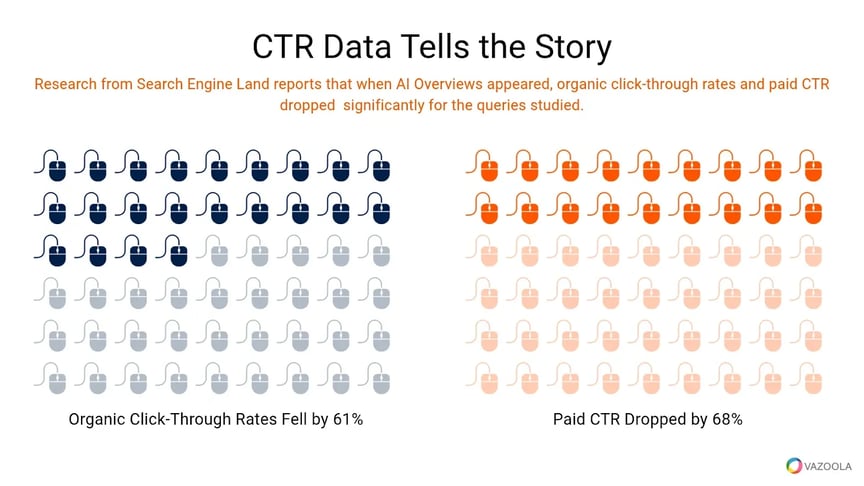
Research from Search Engine Land reported that when AI Overviews appeared, organic click-through rates fell by 61% and paid CTR dropped by 68% for the queries studied.
-
A GrowthSRC study highlights a broader downward trend in organic CTR tied to AI-enhanced search features.
-
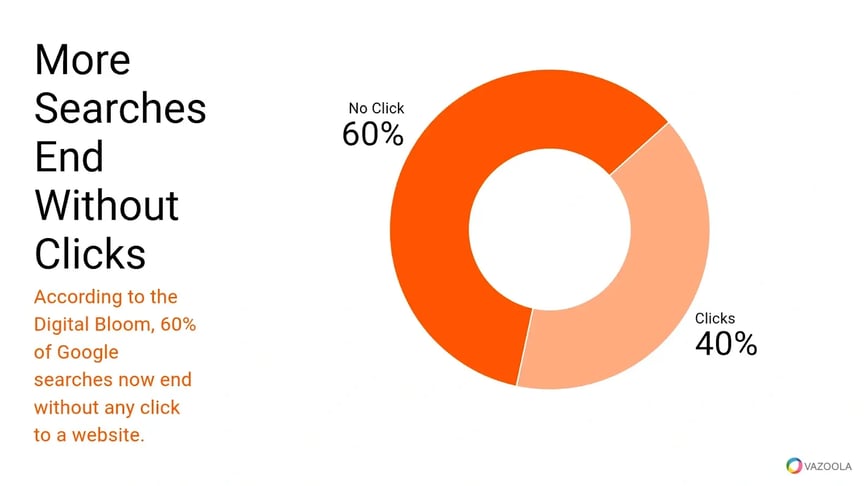
Reporting from The Digital Bloom suggests roughly 60% of Google searches now end without any click to a website.
Those findings support what many agencies are already seeing in client dashboards: Visibility may remain, but visits decline when the answer appears first.
Agencies shouldn’t treat those figures as a reason to panic. The data signals that performance metrics now require more nuance. Ranking reports alone no longer tell the whole story when the SERP itself is doing more of the answering.
What Are AI Answer Boxes (and Why Should SEOs Care)?
AI Answer Boxes are moving from novelty to normal. For many searches, they are now the first thing a user sees and often the first thing a user trusts. This shift is being driven in part by the rise of the generative search engine, which prioritizes synthesized answers over traditional listings.
Once that happens, the fight for visibility shifts from blue links to cited summaries.
Understanding AI Answer Boxes
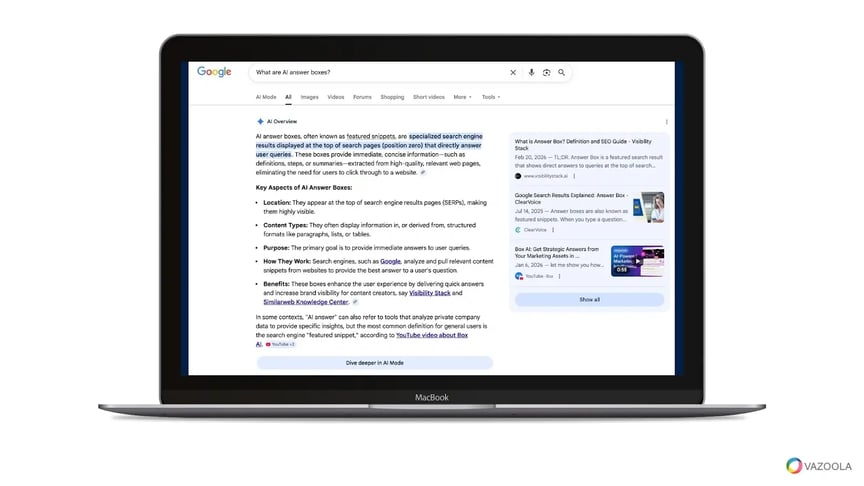
AI Answer Boxes, including Google AI Overviews, are generated summaries that appear near the top of the results page and synthesize information from several sources.
Google previously used the term Search Generative Experience, or SGE, during earlier testing, but the core idea stayed the same: Give users a direct answer without making them open several tabs.
For marketers and agencies, that matters because these boxes interrupt the traditional path from impression to click. A page can still rank well organically and lose traffic if the AI summary answers the question before the user scrolls.
AI Answer Boxes change the search experience in a few important ways:
-
- They appear at or near the top of the results page before most organic listings.
-
- They summarize information from multiple sources into one response.
-
- They reduce the need for users to open several tabs to compare answers.
-
- They highlight only a small set of cited sources, concentrating visibility.
Anyone new to the shift can think of the blue links as the classic list of organic results that defined search for years. AI Answer Boxes now sit above or alongside that list and often steal the spotlight.
The larger point is simple: Agencies can no longer treat AI summaries like a side feature. They are becoming a central part of search behavior.
Getting Into The AI Answer Box Is the New ‘Page 1’
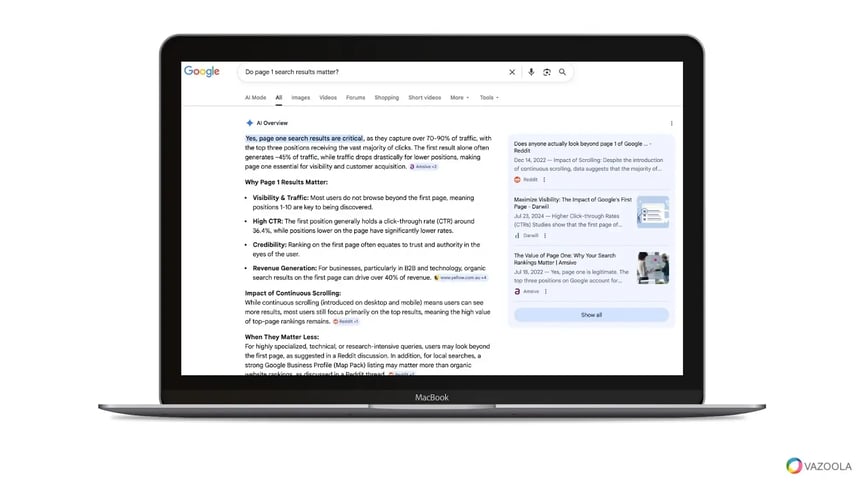
Getting cited in an AI answer is starting to feel a lot like earning page-one visibility used to feel. A brand may not always win a click, but it can still win exposure, trust, and recall by being included in the answer the user reads first.
That changes how agencies should think about rankings. Traditional position one still matters, but citation within an AI summary may now carry equal weight for visibility. In some cases, it may matter more because the citation appears inside the answer itself rather than beneath it.
Organic rankings and AI citation likelihood are closely related, but they aren’t identical. A page that ranks well has a better chance of being seen as a strong source, yet AI platforms also look for clarity, authority, supporting evidence, and recognizable brand signals.
Brand mentions can strengthen that visibility layer because they help establish that a company is discussed and referenced beyond its own website. For agencies trying to future-proof SEO, getting into the answer box is becoming the new version of earning page one.
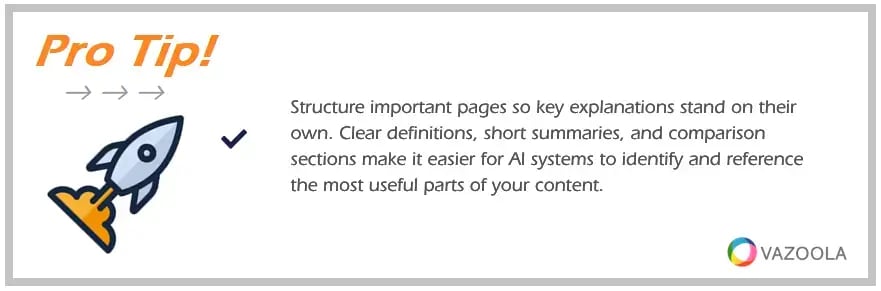
Structure important pages so key explanations stand on their own. Clear definitions, short summaries, and comparison sections make it easier for AI systems to identify and reference the most useful parts of your content.
How AI Selects Its Sources
AI systems don’t pull sources out of thin air. They rely on authority cues, trust signals, and content patterns that help them decide what deserves to be cited.
Many of those signals will look familiar to any SEO team that has spent years building credibility online.
The Role of Authority Signals
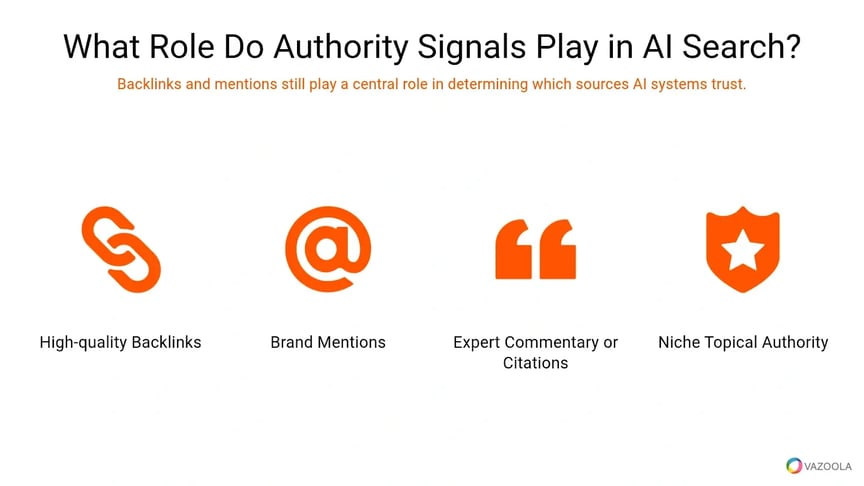
Backlinks and mentions still play a central role in determining which sources AI platforms trust.
The strongest authority signals usually include:
-
- High-quality backlinks from reputable publications
-
- Brand mentions across credible industry sites
-
- Expert commentary or citations
-
- Consistent topical authority within a niche
In an AI-first environment, link building and brand visibility work best as a team rather than as separate tactics.
Likewise, evidence, citations, and external validation help AI models determine which sources look dependable enough to surface. Agencies that treat off-page SEO as optional are likely to fall behind because authority is now doing double duty: it supports both rankings and AI citation potential.
Why E-E-A-T and off-page credibility still matter
Experience, expertise, authoritativeness, and trustworthiness still shape how search systems evaluate content.
AI-generated answers may feel new, but they still lean on old rules about credibility. A thin article on a weak domain is less likely to be cited than a well-supported page backed by a recognized brand and strong off-page signals.
Off-page credibility matters because AI systems need shortcuts for deciding who deserves trust. Links, mentions, expert references, and strong digital footprints all help fill that role.
A useful comparison is how systems such as Perplexity often show sources more visibly, while Google may embed citations more selectively. The display differs, but the underlying need for trustworthy inputs does not.
Pay attention to how often your brand appears alongside specific topics across the web. When search engines repeatedly see your brand mentioned in connection with a subject, they are more likely to treat your site as a credible reference point.
What Agencies Need to Do Differently
The old SEO playbook is not dead, but it is missing pages.
Agencies still need strong content and sound technical SEO, yet those basics are no longer enough by themselves. AI-first search rewards brands that look authoritative before the click ever happens.
Off-Page Strategy in an AI-First World
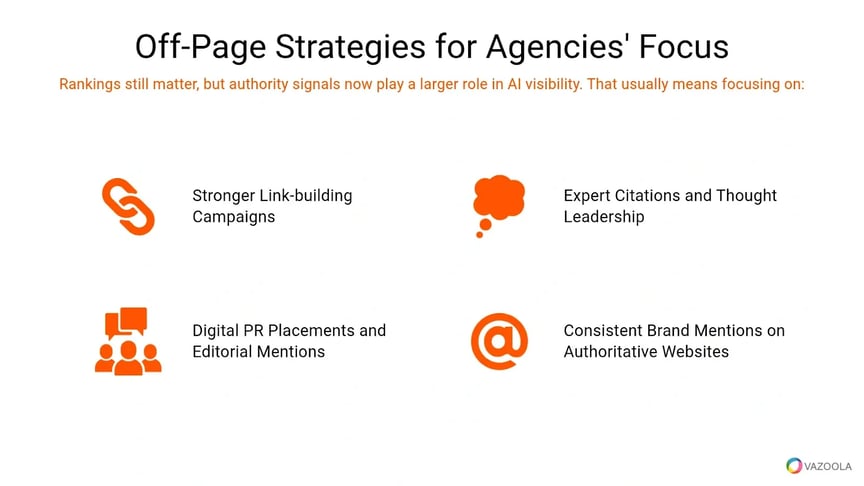
Agencies need to broaden what success looks like in SEO. Rankings still matter, but authority signals now play a larger role in AI visibility.
That usually means focusing on:
-
- Stronger link building campaigns
-
- Digital PR placements and editorial mentions
-
- Expert citations and thought leadership
-
- Consistent brand mentions across authoritative websites
The best strategies now connect those pieces. Link building helps establish authority. Brand mentions reinforce recognition. Together, they create a stronger footprint for both generative search engines and large language models.
Why Link Building + Brand Mentions Work Together
A backlink tells search systems that another site is willing to send traffic or signal trust. Meanwhile, a brand mention tells them the brand is part of the wider conversation even when no link is attached.
When those signals appear together across quality publications, they create a richer authority profile.
That is especially useful in an AI environment because citations are often driven by patterns of credibility, not just one ranking factor. Agencies that treat mentions and links as complementary signals are more likely to improve visibility inside AI-generated answers.
Practical steps to optimize for AI visibility
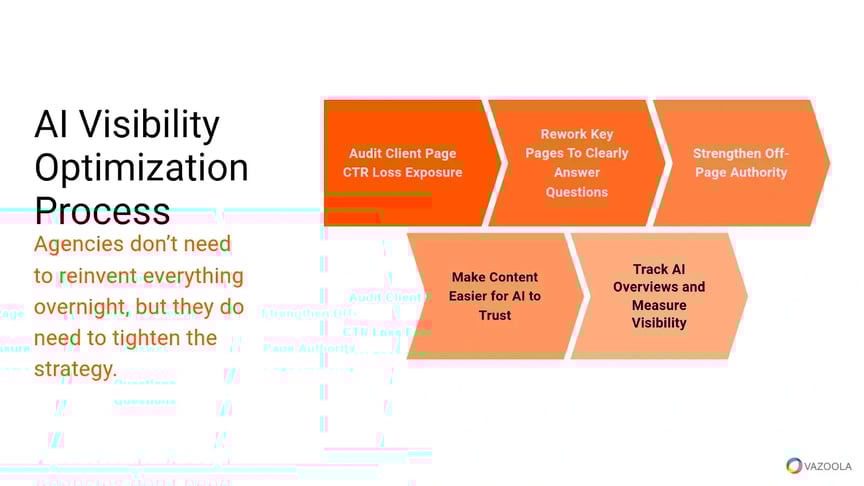
Agencies don’t need to reinvent everything overnight, but they do need to tighten the strategy. A few practical moves can go a long way.
-
Audit which client pages are most exposed to informational-query CTR loss.
-
Rework key pages so they answer questions clearly, directly, and in structured sections.
-
Strengthen off-page authority with high-quality backlinks, digital PR, and relevant brand mentions.
-
Add original research, expert commentary, and citations that make content easier for AI models to trust.
-
Track when AI Overviews appear for priority queries and measure visibility beyond standard rank reports.
Let’s face it: Search is not going back to the old blue-link model. Agencies that accept that reality early will have the best chance to adapt, protect traffic where possible, and earn visibility where the next wave of search is already heading.
Build content around original perspective instead of repeating common explanations. Expert commentary, proprietary data, or unique frameworks give AI systems stronger reasons to cite your page instead of summarizing a generic article.
The Next Chapter of Search Visibility
AI Overviews are changing how visibility works in search. Agencies that adapt—by strengthening authority signals, structured content, and credible mentions—will be the ones that continue showing up when answers are generated.
If your team is looking for ways to strengthen backlinks, brand mentions, and overall authority, Vazoola can help.
Because as AI answers more questions at the top of search, one question matters most: Will your content be part of the answer?
Periodically test your industry queries inside AI tools such as ChatGPT or Perplexity, but do not stop at surface results. Compare which sources appear repeatedly across platforms. Patterns in those citations often reveal which authority signals matter most and where your content is still invisible.