

Feb 06, 2026

Casey Bjorkdahl is one of the pioneering thought leaders in the SEO community. In 2010, Casey co-founded Vazoola after working for a Digital Marketing Agency for five years in New York City. Vazoola is now one of the fastest growing and most widely recognized SEO marketing firms in the country.


If you’ve been working in search engine optimization long enough, you know backlinks are the absolute heartbeat of page rankings.
You also know the old way of building links before AI-assisted link building came along was time-intensive and cumbersome.
You had to rely heavily on article farms and submissions to directories or forums. Getting results took forever and burned through money like wildfire.
Adding another layer of complexity, Google updates like Panda and Penguin came along and shifted the focus to relevance, quality, and authority.
The change led to strategies like outreach, guest blogging, and digital PR to get credible links. Unfortunately, you might work hard and get the sheer volume of links without clear relevance or editorial context. That eventually leads to diminishing returns when it comes to rankings.
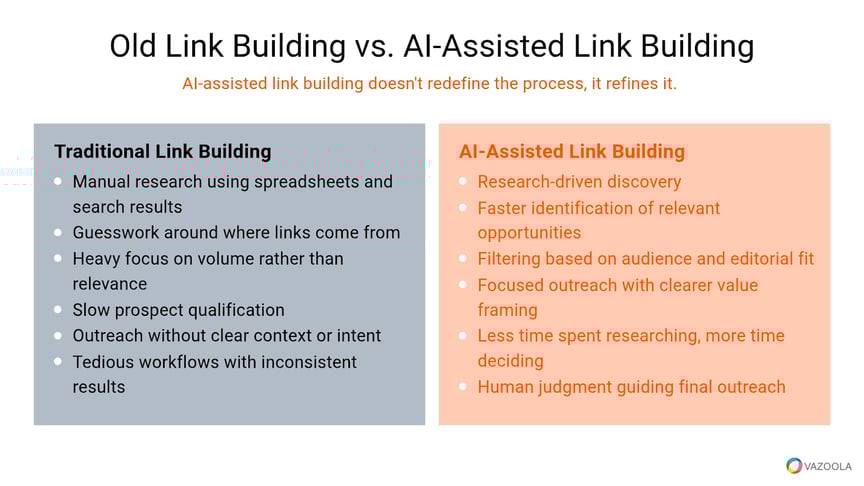
As a result of those changes, link building had to also adapt to keep up. In fact, brands that still use the old playbook are bound to see their online visibility fall off a cliff in 2026. And who wants to stay stuck like quicksand on Google’s page 54?
That shift opened the door for AI to support link building in a more targeted and research-driven manner. At Vazoola, we’ve learned how to use AI as a powerful tool for link building and avoid all that wasted effort and money.
Plus, we’ve learned to build AI backlinks exceedingly well without incurring judgment or losing any credibility from the “AI slop” crows. You know, the ones who subscribe to the notion that any AI-assistance is bad.
So, what does all that mean when it comes to getting your website pages to rank? That’s the important question, right?
We’re glad you asked.
Key Takeaways
-
AI speeds up link opportunity research and qualification.
-
AI improves outreach drafts, but it requires human editing.
-
Strong links still depend on relevance and audience overlap.
-
Teams win by pairing AI efficiency with human decisions.
Table Of Contents
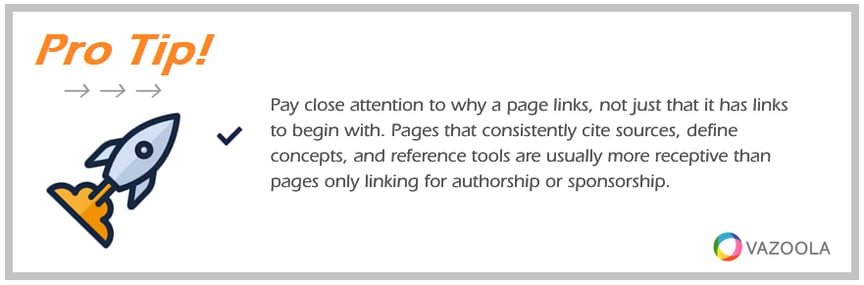
Pay close attention to why a page links, not just that it has links to begin with. Pages that consistently cite sources, define concepts, and reference tools are usually more receptive than pages only linking for authorship or sponsorship.
How AI Changes The Link Building Workflow
Back in the day, link building started off with spreadsheets, manual searches, and what seemed like endless cycles of qualifications. But AI drastically reduced the time spent on all that front-end work.
Today, platforms scan topics and summarize themes. They can surface patterns across massive sets of sites in just seconds. Research no longer revolves around chasing individual prospects. Instead, it’s about spotting clusters of opportunities.
The outreach process has also shifted. AI may not be able to replace relationship building, but what it can do is help structure clean language and make specific requests. With artificial intelligence, you can produce drafts faster and revise them… easy as pie.
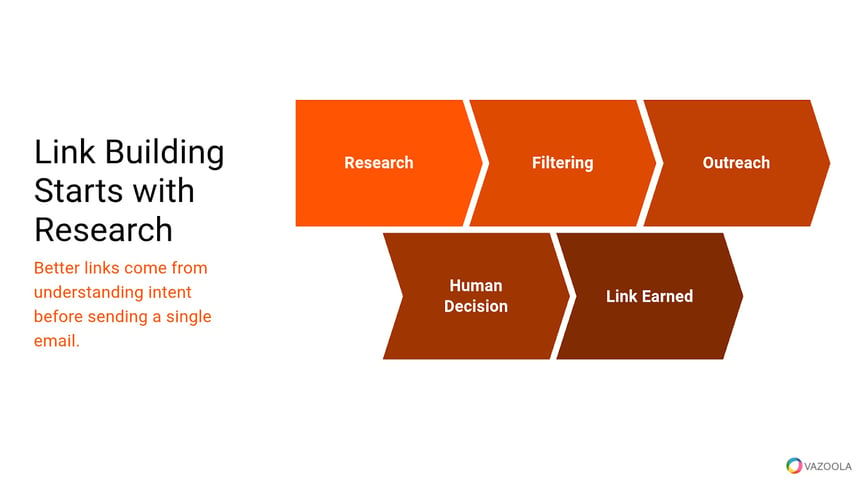
Even if the tools feel new, you’ll still be able to recognize the workflow’s familiar arc. First comes the discovery phase. Then filtering narrows the list. Outreach follows with a focused message. It takes a human decision, though, to close the loop.
Using AI Tools For Link Opportunity Research
AI adds the most immediate value during link building’s research phase.
Instead of relying on manual searches and their own assumptions, teams can use AI to identify patterns. It helps them uncover intent and organize opportunities before their outreach ever begins.
The goal? Not automation for its own sake, but faster insight into the best sources of new links.
AI Backlink Discovery And Prospecting
If there’s one thing AI does well, it’s early-stage discovery. Teams no longer have to guess where their links might come from. They can prompt AI to generate lists of organizations, creators, communities, and publishers that regularly reference a topic.
Those prompts provide the best results when they’re framed not solely on keywords, but on actual intent.
AI also helps determine what questions people ask when they need help on a topic – or when they’re still weighing their options. Such questions can be transformed into articles that reference useful sources.
When AI spots these patterns, it can propose link opportunities that are tied to real problems and comparisons. Link opportunities won’t be based on random keywords.
At first, AI’s output will feel broad. That’s OK; it’s to be expected. Your goal at this stage isn’t precision, it’s coverage. You’ll have a chance to refine it later on.
Look for patterns in non-links as well as actual links. If AI tools see a lot of pages that have mentioned a concept but didn’t cite sources, that gap can signal an opportunity to introduce a clean, quotable reference.
AI Competitor Analysis of Link Gaps
AI is even more useful when you feed it real backlink data. You can export competitor links from a backlink tool, then ask the AI to summarize whatever patterns it sees. It can tell you which pages attract links, what formats are repeatedly employed, and which audiences the pages target.
That sort of competitor analysis works best when your objective is to understand searchers’ motivations, not just to copy a bunch of URLs.
AI uncovers why certain pages earn links. It might point out their original data, plain definitions, or practical tools. You can take those insights and decide what to pursue next without duplicating content.
Opportunity Filtering
Filtered results transform volume into focus. AI can review prospects and compare them against consistent criteria. Then a human gets to review the final list.
When you write effective prompts, you can have AI assess topic relevance and audience overlap. It also can help you identify the potential link’s editorial fit along with its timeliness.
Plus, artificial intelligence tools flag credibility signals – factors like clear authorship, topical depth, and the kind of structured content that supports citations.
Remember, filtering is most effective when you have realistic expectations. AI suggests, but it’s humans who decide. That balance grounds the entire process.
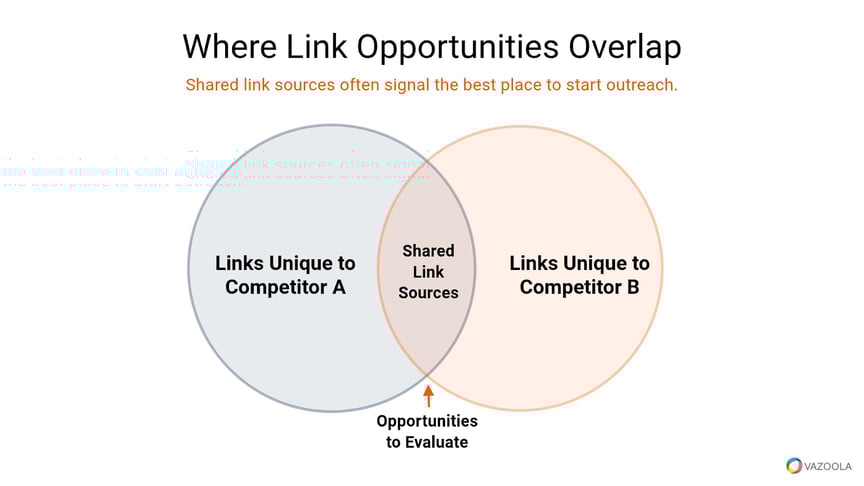
Link Opportunities That Stand Out With AI
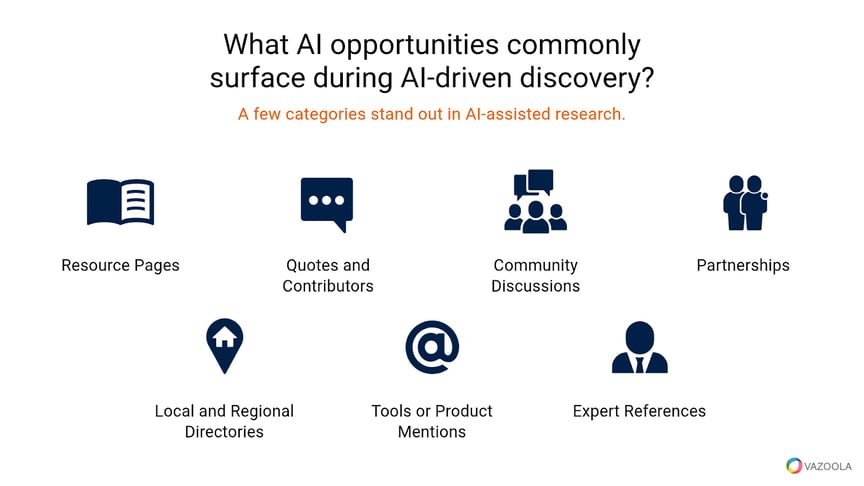
AI is at its very best when link opportunities follow a recognizable pattern. A few categories consistently surface during AI-assisted research, including:
-
• Resource pages that collect helpful links around a specific topic and update their recommendations on a regular basis.
-
• Quote and contributor features looking for short, clear insights that can be easily included.
-
• Community discussions where people talk through real problems, often referencing useful tools and resources.
-
• Partnership stories that grow out of shared challenges, data, or collaborative research.
-
• Local or regional directories that still make sense when they genuinely serve your audience.
-
• Tools or product mentions that serve as product-led content link paths.
-
• Experts who are likely to reference supporting data or tools.
AI helps surface these opportunities quickly. This much is true. But people still need to decide which are worth pursuing and how to approach them.
Drafting Outreach That Earns Links with AI
Outreach is still the most sensitive part of the whole link-building process. No matter what you do or how you look at it, AI just can’t replace relationship building. There’s simply no denying that. But it can reduce friction by helping teams structure their messages so they’re both clear and concise.
When it’s used carefully, artificial intelligence supports better first drafts with plenty of room left over for human reasoning and personalization.
Email And Pitch Drafting
Can AI help writing link outreach email?
Indeed! With AI, teams can finish up and move on from the first draft that much faster. But clear prompts matter.
Ask for short sentences and neutral language. Tell the AI platform to integrate one clear ask. Be sure to request appropriate tones that fit different editorial styles.
You’ll find your AI-assisted drafts improve when you add details like your target audience, the page’s topic, and exactly how the link helps readers.
Try and use prompts like:
-
Write a short email pitch with one clear ask for a link.
-
Add personalization based on their industry or audience.
-
Keep sentences under 15 words and avoid buzzwords.
-
Give 3 options: helpful, casual, and formal tone.
Even with the ideal prompt, editing is essential. On their own, AI drafts can sound correct enough, but still incomplete. That’s where human judgment earns its keep. It’s people who add precise details and remove useless filler.
In essence, it takes a human to truly sound human.
Personalization
Personalization works best when it feels natural. You can have AI generate opening lines that reference real context by feeding it details about the site, the author’s focus, or recent topics.
Keep those lines brief and factual since over-personalization feels forced and weakens trust.
You’ll want to keep in mind that your intention is peer-to-peer communication. AI helps with phrasing, but humans make the delivery feel like it came from a real colleague.
Framing Value
When value stays clear, outreach succeeds. AI assists you with articulating why a resource deserves a link by summarizing things like:
-
What problem does it solve?
-
Why is the answer harder to find elsewhere?
-
Who benefits from the link?
Editors are more likely to respond in a positive way when your request first acknowledges the audience and its pain points.
Google explains how to ethically structure an audience-first outreach campaign that lines up with its longstanding best practices. According to the search giant’s advice, links should be earned because they add value for users – not created solely for ranking purposes.
Keep your outreach requests narrowly focused on one clear action. Editors respond more often when the ask is simple and specific. They want to give an easy “yes” or “no,” not be weighed down by multiple suggestions.
Developing Linkable Assets with AI
Artificial intelligence also supports linkable asset planning – without overstepping. It works best when you use it for structure, not authority.
Build Link-Attracting Formats
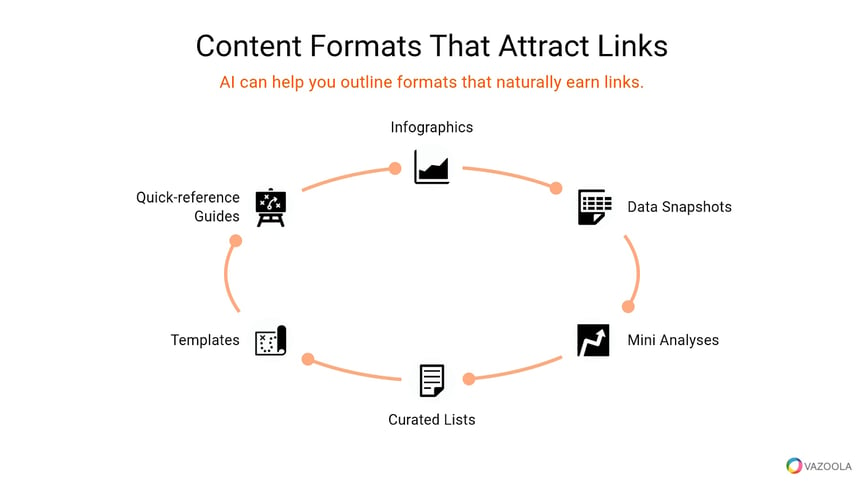
AI helps you outline formats that naturally earn links, such as:
-
Mini analyses.
-
Curated lists.
-
Templates.
-
Quick-reference guides.
Prompt AI to suggest headings based on novice questions – or have it cluster related long-tail searches. That way, you can better shape content that’s useful and ready to cite.
AI also can recommend internal linking paths that strengthen topical hubs.
Artificial intelligence adds value through its citation-friendly verbiage. Short, accurate sentences summarize findings. They make it easier for others to reference your work.
Of course accuracy checks are non-negotiable. That’s the case no matter how confident the draft might sound. You’ll find AI tools making mistakes or even inventing information when they can’t find the facts.
Regardless, Google has confirmed that links are still a core signal for ranking and discovery – even as search systems grow more automated and AI-assisted.
Suggested Prompt Planning
You can use prompt planning to keep your linkable asset creation focused on structure and usability more than just depth.
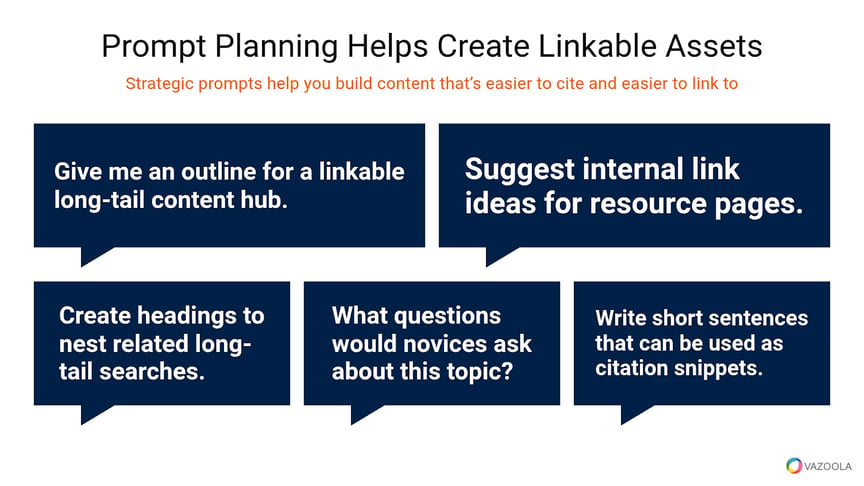
Prompts like the following – whether given to ChatGPT, Claude, Gemini, or another AI platform – help you build content that’s easier to cite and painless to link to:
-
Give me an outline for a linkable long-tail content hub.
-
What questions would novices ask about this topic?
-
Create headings to nest related long-tail searches.
-
Suggest internal link ideas for resource pages.
-
Write short sentences that can be used as citation snippets.
Where Smart Links Are Earned
When’s the smartest time to use AI in your link-building workflow?
That would be at the beginning and the end of the process. The tools accelerate investigation and they help you identify intent patterns. They also summarize motivations and help draft clear outreach correspondence.
Humans, however, still own the end result. It’s a lot harder to automate negotiation, trust, partnership development, and, of course, editorial savvy.
Strong AI such as ChatGPT link building still sits at the intersection of relevance, usefulness, and audience overlap. It helps real people evaluate those factors – it doesn’t do ALL the work for them.
People also decide how to act on these discoveries based on context and their own experiences.
When teams adapt their KPIs accordingly, outcomes are bound to improve. First, discovery leads to relevance; then relevance guides outreach. Ultimately, it’s the outreach that triggers a human decision, and – BAM – a link is earned.
Does your team want to explore how AI-assisted research and smarter outreach fit into your own sustainable link-building strategy?
Vazoola provides practical frameworks and support that gets long-term results.
By working with Vazoola, teams can turn research into earned links. Our link-building services are grounded in relevance, editorial standards, and the kind of real outcomes our clients need to succeed.
We help marketing teams focus on the opportunities that make the most sense for their audience, their content, and their long-term visibility. Contact Vazoola today for a free demo.
Don’t hesitate to revisit your successful links and ask what made them work. When you feed those examples back into your AI prompts, it can help you refine future research and outreach. You’ll discover opportunities with a higher likelihood of success.