

Aug 19, 2026

Casey Bjorkdahl is one of the pioneering thought leaders in the SEO community. In 2010, Casey co-founded Vazoola after working for a Digital Marketing Agency for five years in New York City. Vazoola is now one of the fastest growing and most widely recognized SEO marketing firms in the country.


A manual AI visibility audit can start innocently enough. An agency opens ChatGPT, enters a few client-related prompts, checks the answers, and records the results in a spreadsheet.
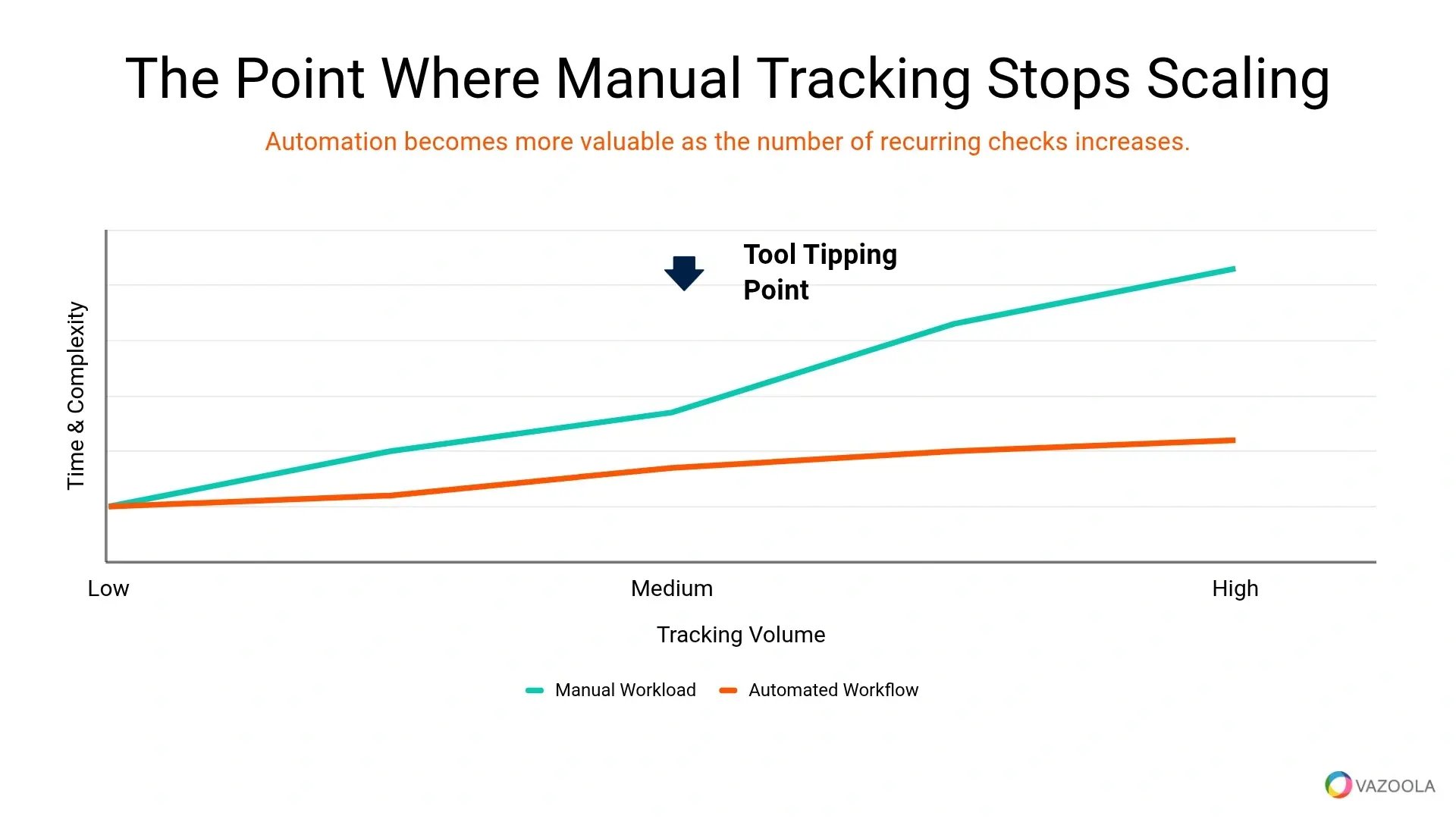
The process works until five prompts become 50, one client turns into 10, and a single AI platform quickly grows to six.
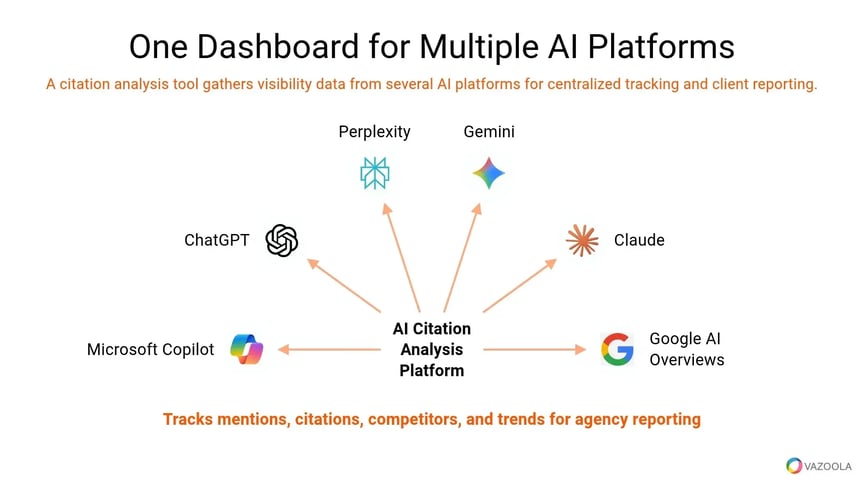
AI citation analysis tools turn that growing experiment into a repeatable measurement process. They monitor brand mentions, citations, competitors, and source patterns across AI-generated answers.
This guide explains when agencies need that technology, what the tools measure, and how to choose a platform that fits real client work.
Key Takeaways About AI Citation Analysis Tools
-
Manual auditing helps agencies discover initial visibility gaps, while tools make ongoing, multiplatform monitoring practical.
-
Most platforms measure brand mentions, citation frequency, competitive position, source attribution, and prompt coverage.
-
The right platform depends on the number of brands, AI engines, prompts, and client reports an agency manages.
-
Smaller teams may not need paid software until audits become recurring or clients expect consistent performance data.
Table of Contents
When You Need a Citation Analysis Tool (and When You Don’t)
Manual audits remain useful for initial discovery. An agency can run representative prompts, note which brands appear, inspect the cited pages, and use a content gap analysis to identify missing topics.
The process helps validate whether a client has a meaningful AI visibility gap before an agency purchases another platform. However, manual tracking becomes harder to manage once an agency moves beyond an exploratory audit.
Common limitations include:
-
Testing one prompt at a time across several AI platforms
-
Recording results without a reliable historical timeline
-
Comparing competitors through disconnected spreadsheets
-
Capturing screenshots that become outdated quickly
-
Reporting observations without enough data to prove a trend
 Establish a baseline over several weeks before connecting visibility changes to a campaign. A longer measurement window makes genuine movement easier to distinguish from normal answer variation.
AI-generated answers can also differ among platforms. Research into AI search citation patterns continues to show how much source selection can vary between systems.
A study examining more than 24,000 conversations and 366,000 citations found that models from OpenAI, Perplexity, and Google displayed distinct news-source preferences, even though they shared some broader citation patterns.
The findings reinforce why agencies should monitor multiple platforms rather than treating one AI-generated answer as a complete picture of visibility.
Citation analysis tools address those limitations by automating the repetitive parts of measurement. Depending on the platform, they can help agencies:
-
Monitor dozens or hundreds of prompts on a recurring schedule
-
Track changes in brand presence over weeks or months
-
Compare a client’s citations and mentions with competitors
-
Identify the domains that influence AI-generated recommendations
-
Build dashboards and reports that clients can understand
The reporting benefit matters when an agency wants to sell AI visibility as a service. Screenshots can illustrate a problem, but recurring data helps show whether the agency’s work changed citation frequency, competitive position, or query coverage.
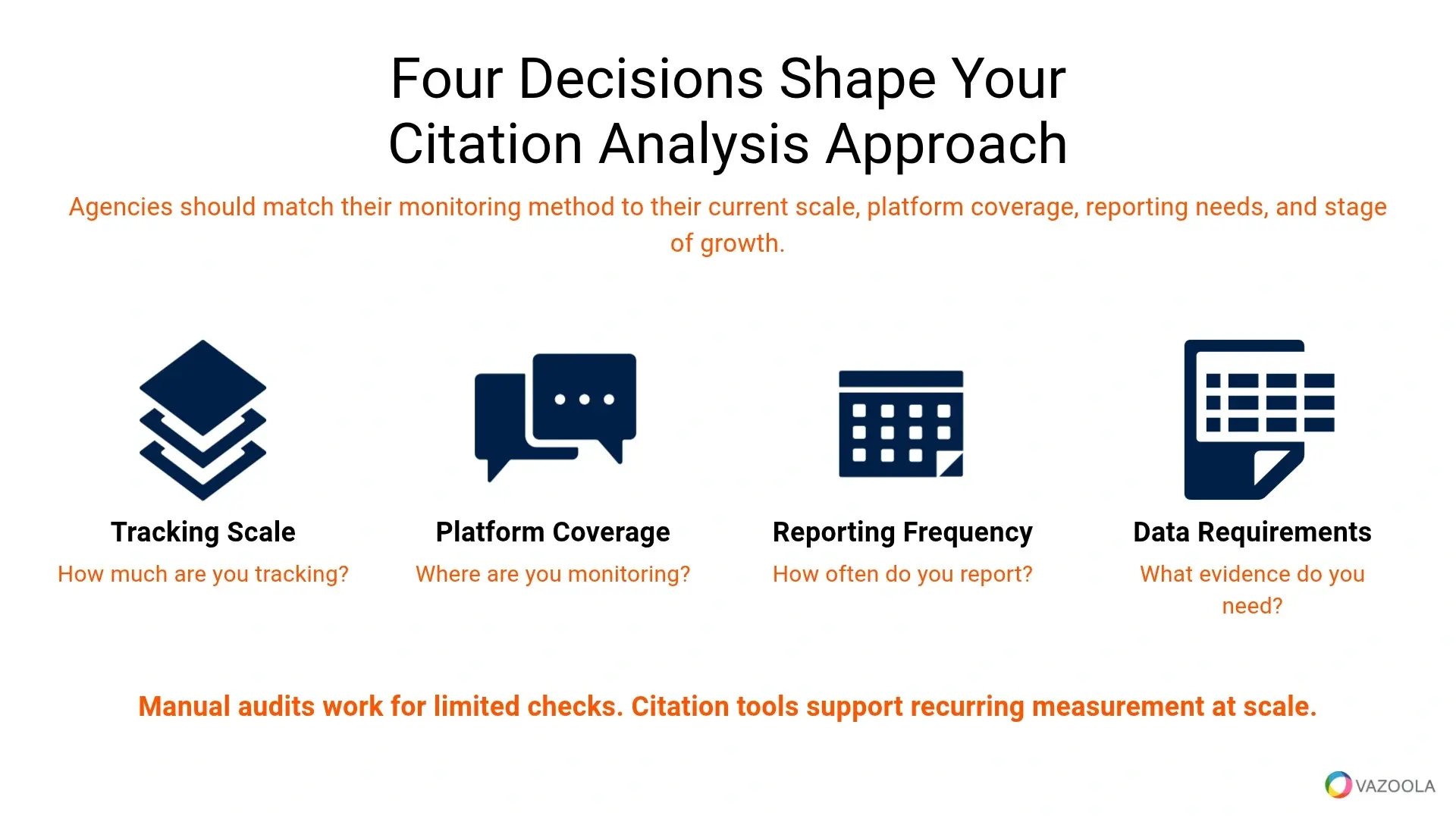
Start manually when testing one brand or developing a new service. Move to software when prompt sets grow, reporting becomes recurring, or data collection consumes time that strategists should spend interpreting results.
What AI Citation Analysis Tools Measure
AI citation analysis asks more than whether a brand appeared. Effective platforms show how often it appeared, where it appeared, which sources supported the answer, and how its visibility compared with competitors.
Brand Mentions and Citation Frequency
Brand mention frequency measures how often an AI answer names a company, product, or service. Citation frequency measures how often the answer links to the brand’s website or attributes information to one of its pages.
The metrics can move independently. An AI engine might recommend a company while citing a review site, publisher, or competitor comparison. Agencies using LLM seeding should track both metrics to determine whether broader brand recognition also produces source-level authority.
Competitive Positioning
Competitive positioning shows which brands appear most often for a selected prompt set. Depending on the platform, reports may include share of voice, average position, recommendation frequency, sentiment, or head-to-head comparisons.
Competitive visibility often provides more context than an isolated brand score. A client can gain mentions while losing overall share because competitors are improving faster.
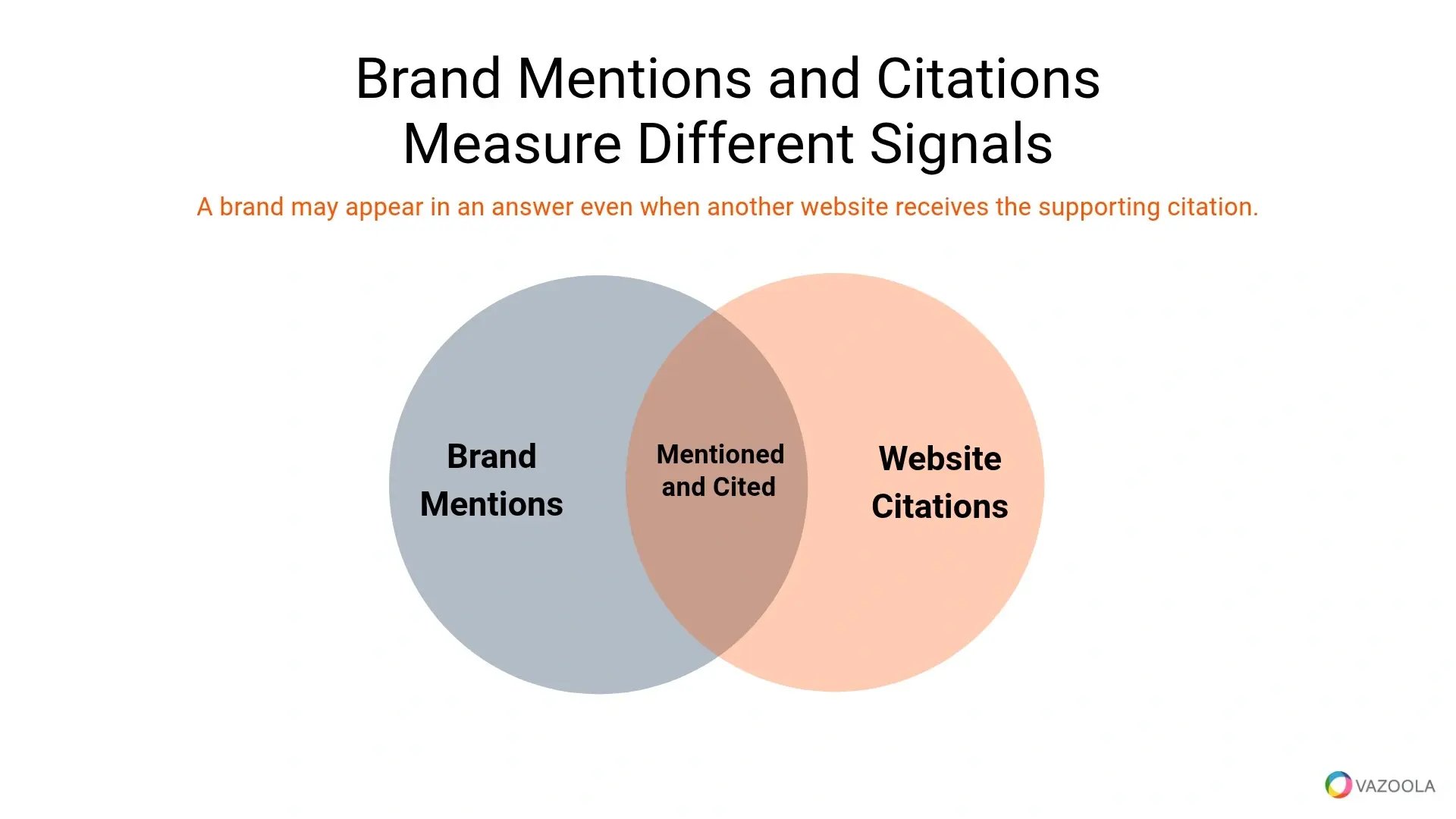
Source Attribution
Source attribution identifies the pages and domains that AI engines cite. Agencies can use the information to uncover publishers, forums, review platforms, and industry resources that repeatedly shape generated answers.
Citation volume alone does not reveal whether a source influenced the final response.
One 2026 evaluation of commercial chatbots answering current news questions found that retrieval failures caused more than 70% of the errors observed across its test set.
Although the study focused on news retrieval, its findings illustrate why agencies should examine which sources AI systems find, not merely whether a citation appears.
Search Query Coverage
A report can only represent the prompts included in the project. Preselected queries accelerate setup, but they may not reflect the questions a client’s audience asks. Custom queries offer more control, although they require stronger research and regular maintenance.
Check whether a platform supports prompt grouping, geographic targeting, recurring tracking, and historical answer storage. Narrow coverage can create an inflated or incomplete impression of visibility.
Topic and Intent Coverage
A useful prompt library spans the customer decision process. It might include discovery prompts such as “best CRM platforms,” comparisons such as “Salesforce vs. HubSpot,” and specific use cases such as “best CRM for a real estate company.”
Agencies conducting a Google AI Overview impact analysis should include both broad and high-intent queries rather than tracking only a small set of preferred prompts.
Topic clusters produce a more credible visibility analysis than a few favorable prompts. They also help agencies identify whether citation performance weakens at a specific stage of the buying process.
Tag prompts by topic, funnel stage, and intent before importing them. The structure makes reporting more useful when clients ask where visibility improved, not merely whether an overall score increased.
How to Evaluate AI Citation Tools for Your Use Case
The best citation analysis service for AI SEO depends on the decisions an agency needs to make.
A small internal team may value fast setup and actionable recommendations. An agency managing several accounts may instead place greater weight on workspaces, exports, permissions, and white-label reporting.
The best AI citation analysis tool is the one that matches the agency’s platform coverage, client volume, reporting workflow, and need for actionable recommendations.
Use the following process to compare tools:
-
Define the audience for the data: Decide whether strategists will analyze results internally or clients will access dashboards directly.
-
Choose the required AI platforms: Determine whether you need only Google AI Overview citation analysis or monitoring across ChatGPT, Perplexity, Gemini, Claude, Copilot, and Google AI Mode.
-
Calculate the full tracking volume: Multiply clients by competitors, markets, prompts, platforms, and tracking frequency.
-
Separate reporting from recommendations: Some platforms identify citation gaps, while others propose or execute content improvements.
-
Review the reporting workflow: Examine exports, scheduled reports, integrations, historical retention, user permissions, and branding controls.
-
Run a controlled trial: Give each shortlisted tool the same brands, competitors, and prompts. Compare setup time, result quality, discrepancies, and recommendation usefulness.
Calculate the cost per client workspace rather than comparing advertised starting prices. Prompt allowances, tracked engines, competitors, and extra domains often determine the platform’s true agency cost.
AI Citation Analytics Platform Comparison
Which citation analysis service is best for AI SEO?
No platform leads in every category. Agencies should compare each option against their own client volume, platform requirements, and reporting process rather than choosing the longest feature list.
Pricing and platform coverage were reviewed in August 2026 and may vary by plan or billing cycle.
|
Platform |
Platforms Tracked |
Main Function |
Best For |
Starting Cost |
|
Omnia |
ChatGPT, Perplexity, Google AI |
Citation gaps and recommendations |
Small teams |
€63/month |
|
Indexly |
ChatGPT, Gemini, Perplexity, Claude |
AI visibility and SEO tracking |
SEO agencies |
$99/site/month |
|
Siftly |
ChatGPT, Google AI Overviews, Perplexity |
Visibility and content gaps |
Growth teams |
$79/month |
|
Quolity AI |
ChatGPT, Claude, and others |
Citation quality analysis |
Growing brands |
$99/month |
|
Profound |
Major AI platforms |
Enterprise visibility reporting |
Large organizations |
Custom |
|
Semrush |
ChatGPT, Google AI, Gemini, Perplexity |
AI tracking within SEO tools |
Semrush users |
$99/domain/month |
Omnia
Omnia may appeal to smaller teams that want the platform to turn monitoring data into a practical action plan.
- Platforms tracked: ChatGPT, Perplexity, Google AI Overviews, and Google AI Mode, with support for other engines available on certain plans.
- What it does: Extracts citation sources, monitors share of voice and sentiment, identifies visibility gaps, and recommends actions.
- Built for: Small marketing teams and agencies that want monitoring and execution support in one system.
- Cost: Paid plans start at approximately €63 per month with annual billing, although limits vary by tier.
Indexly
Indexly offers a broader search toolkit for agencies that do not want AI citation analysis separated from technical and traditional SEO work.
- Platforms tracked: Major tools such as ChatGPT, Gemini, Perplexity, and Claude, with model coverage varying by plan.
- What it does: Combines AI visibility tracking, citation gap analysis, competitor research, technical audits, indexing diagnostics, and traffic reporting.
- Built for: Agencies and marketing teams seeking AI visibility and SEO capabilities within one platform.
- Cost: Current packaged services start at $99 per website per month, while enterprise and multi-domain pricing are customized.
Siftly
Siftly suits teams that want to connect citation monitoring with optimization work instead of stopping at a visibility score.
- Platforms tracked: AI search and answer platforms that include ChatGPT, Claude, Perplexity, Gemini, and Google experiences, depending on the plan.
- What it does: Measures brand visibility, benchmarks competitors, identifies cited sources, and highlights content and authority gaps.
- Built for: Agencies, B2B marketers, ecommerce brands, and growth teams.
- Cost: A free option is available, while the Starter tier begins at $79 per month.
Quolity AI
Quolity AI places greater emphasis on the context and value of a citation, which can help teams look beyond raw mention totals.
- Platforms tracked: The Signal plan tracks ChatGPT and Claude, while the Echo plan expands platform coverage.
- What it does: Tracks brand mentions, evaluates citation quality, compares competitors, and reports visibility changes.
- Built for: Growing brands and teams that want to examine citation quality alongside frequency.
- Cost: The Signal plan costs $99 per month, Echo costs $299 per month, and enterprise-level options use custom pricing.
Profound
Profound targets organizations that require deeper segmentation, governance, and reporting across extensive prompt sets.
- Platforms tracked: Major answer engines and AI search platforms through recurring prompt testing.
- What it does: Tracks citations, sentiment, competitors, rankings, and brand visibility while supporting enterprise reporting and analysis.
- Built for: Large agencies, enterprise brands, and teams with complex markets or reporting requirements.
- Cost: Pricing depends on the selected product, platform coverage, and enterprise requirements. Buyers should request a current quote.
Semrush
Semrush provides a logical option for agencies that already manage search campaigns inside its broader SEO ecosystem.
- Platforms tracked: Mentions from ChatGPT, Google AI, Gemini, and Perplexity.
- What it does: Combines prompt tracking, competitor research, brand perception analysis, source research, and AI-readiness auditing.
- Built for: Agencies and marketing teams that want AI visibility data alongside established SEO tools.
- Cost: The AI Visibility base plan costs $99 per month per domain with annual billing and includes 25 tracked custom prompts.
Ask every vendor how it handles answer volatility, location, personalization, and repeated sampling. Two tools can monitor the same prompt yet report different results because their collection methods differ.
Picking Your Tool and Moving Forward
A tool cannot decide which visibility gaps deserve attention. It can reveal that competitors dominate comparison prompts, third-party publishers supply most citations, or a client’s strongest content remains absent from AI answers.
Strategy determines what happens next.
Choose a platform that provides enough reliable data to guide action without burying the team beneath unused reports. Then connect those findings to content improvements, digital PR, technical work, and consistent brand placements.
Agencies may also need to explain AI visibility clearly so clients understand why citations, mentions, and share of voice matter.
Here at Vazoola, our team helps agencies respond to citation gaps with link building, digital PR, and strategic brand placements. When AI platforms repeatedly cite competitors, publishers, or review sites instead of a client, an authority-building campaign can target the sources and topics shaping those answers.
Build an action threshold into every report before sharing it with a client. For example, require a visibility change to persist across multiple tracking periods before recommending a major content or authority campaign.