

Oct 21, 2026

Casey Bjorkdahl is one of the pioneering thought leaders in the SEO community. In 2010, Casey co-founded Vazoola after working for a Digital Marketing Agency for five years in New York City. Vazoola is now one of the fastest growing and most widely recognized SEO marketing firms in the country.


Customers can now evaluate a company without ever visiting its website.
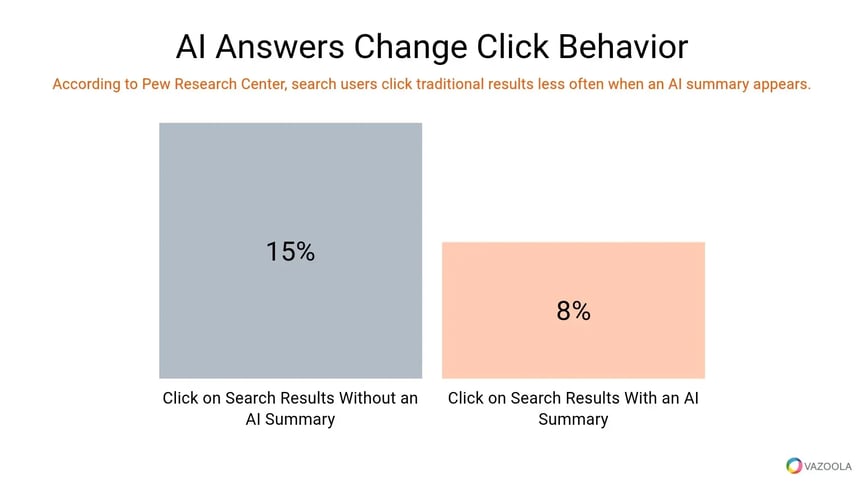
Pew Research Center found that users clicked traditional results during only 8% of Google searches with an AI summary, compared with 15% of searches without one. A brand’s presence inside the answer therefore matters, even when the answer sends little referral traffic.
A quick audit reveals whether AI platforms mention the brand, cite its content, and describe it accurately. It also puts some numbers behind the AI search visibility gap between a client and its competitors.
You can complete the process below by setting aside one focused hour and using a fixed group of queries.
AI Visibility Audit Key Takeaways
-
A one-hour AI visibility audit provides a directional snapshot rather than a complete monitoring system.
-
The audit measures citation presence, the brand’s broader mention footprint, and its position against competitors.
-
Five to 10 carefully selected queries can uncover meaningful patterns without turning the audit into a large research project.
-
Consistent prompts and scoring rules make results easier to compare during future audits.
-
The final findings should lead to specific content, authority-building, and client communication priorities.
Table of Contents
What an AI Search Audit Covers and What It Doesn’t
An AI visibility audit answers one central question: Where does the brand stand in AI-generated answers right now?
The audit checks whether the brand appears for relevant queries, whether platforms cite or recommend it, and whether its description matches its actual positioning. It also shows which competitors occupy the space when the client doesn’t.
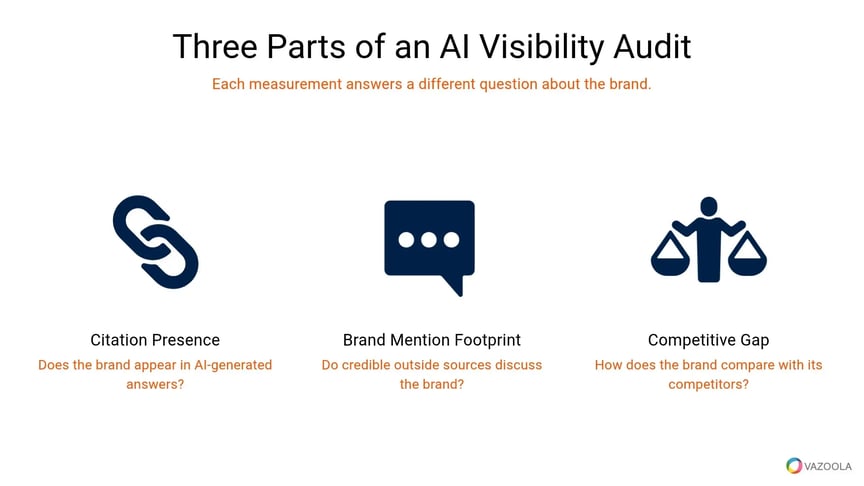
The audit focuses on three measurements:
-
Citation presence: How often the brand or its website appears across selected queries and platforms
-
Brand mention footprint: How frequently credible outside sources discuss the brand in relevant contexts
-
Competitive gap: How the brand’s presence and third-party coverage compare with those of its competitors
Together, these measurements show whether the brand is visible and what may be influencing that visibility.
Treat the results as a dated snapshot. AI answers can vary by platform, user context, location, and when the query runs. Record those conditions so future audits compare similar tests.
The process doesn’t assess page speed, metadata, crawl errors, traditional rankings, or the full quality of the client’s content. Those issues belong in a separate technical SEO audit. A visibility audit may expose symptoms that justify deeper analysis, but it won’t diagnose every underlying cause.
What You Need Before You Start
Preparing the inputs before starting the clock keeps the audit within an hour. You don’t have to conduct fresh research. Instead, use existing campaign materials whenever possible.
Gather the following items:
-
The client’s brand name and known variants: A company called “Miller & Cole Digital,” for example, might also appear as “Miller and Cole,” “M&C Digital,” or a product name used more often than the parent brand.
-
Three to five competitors: Include direct market competitors and businesses that repeatedly occupy the search results or AI answers the client wants to reach.
-
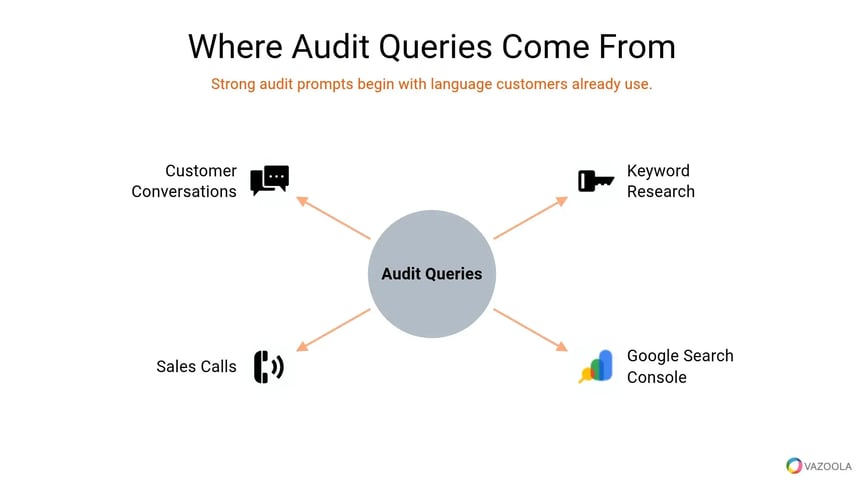
Five to 10 target queries: Pull natural, nonbranded questions from existing keyword research, Google Search Console data, sales calls, and customer conversations.
-
Access to AI platforms: Open ChatGPT, Perplexity, and Google AI Overviews. Free access is enough for a manual baseline.
-
A simple tracking document: Create columns for the query, platform, brand appearance, citation, accuracy, competitors, cited sources, and observations.
Two of those inputs require a little extra thought: the competitor set and the query list.
Market competitors sell comparable products or services, while search competitors compete for visibility across the publications, directories, and AI answers that are relevant to the client.
A software company, for example, might compete for customers against another platform while simultaneously competing for citations against an industry publication or review site.
Choose prompts that reflect how customers actually ask questions. “Best payroll software for a 20-person restaurant” will usually reveal more than “payroll software.” Keep the wording fixed across platforms and future audits.
Tag each query by intent before testing it, such as problem-solving, comparison, or vendor validation. A single overall score can hide a brand that performs well during early research but disappears when customers approach a decision.
The AI Visibility Audit in 3 Steps
The three stages of an AI visibility audit take about 50 minutes, leaving several minutes to organize the final notes. Move quickly, but apply the same criteria to every query and competitor. Consistency matters more than producing a complicated score.
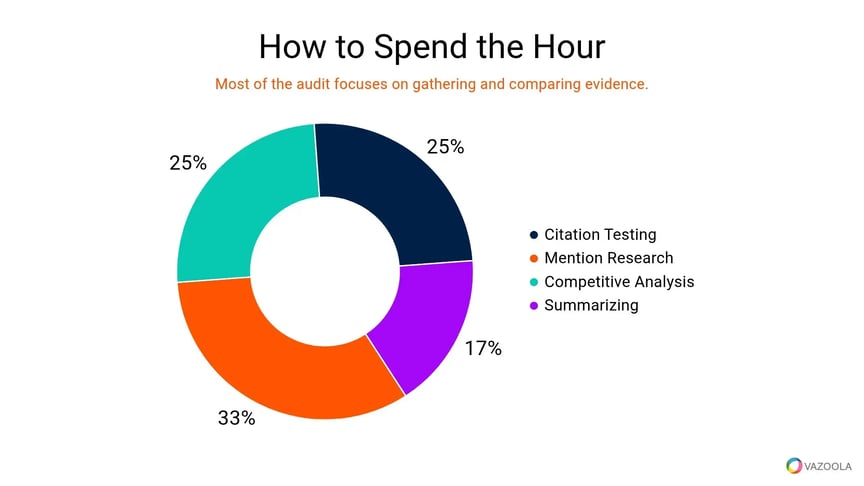
Step 1: Test Citation Presence Across AI Platforms in 15 Minutes
Run each target query through all three AI platforms using fresh conversations where possible. Repeat the same prompt without adding brand-specific hints that might influence the answer. Record the date and any platform settings that could affect the result.
For each response, capture the following details:
-
Whether the client’s brand appears
-
Whether the client’s website receives a citation
-
Whether the platform recommends the brand or merely mentions it
-
Whether the description is accurate
-
Which competitors appear
-
Which pages or domains the platform cites
Calculate citation presence by dividing the number of appearances by the total number of query-platform combinations. Ten queries across three platforms create 30 opportunities, so six appearances produce a 20% presence rate.
Keep brand mentions and website citations in separate columns because a platform may name the company without linking to it.
A practical finding might read: “Across five e-commerce queries, Competitor A appeared in four Perplexity answers, while the client appeared in none.”
One result doesn’t prove a trend, but a repeated pattern across queries deserves attention. Save screenshots or answer text when a finding could influence a recommendation.
With the brand’s presence documented, the next step looks beyond the AI answers for clues about why it appears or remains absent.
Rerun the two or three highest-value prompts in fresh sessions before treating an absence as meaningful. If the brand appears inconsistently, flag the query as volatile instead of counting one response as a clean win or loss.
Step 2: Assess the Brand Mention Footprint in 20 Minutes
Use Ahrefs, Semrush, Brand24, Google Alerts, or another mention-tracking source to review recent references to the brand. Look beyond raw volume by considering the quality and relevance of each mention.
A dozen detailed mentions in respected trade publications may provide a stronger signal than hundreds of automated listings.
Review each group of results for:
-
The total number of recent mentions
-
The authority and topical relevance of the sources
-
The context surrounding the brand name
-
The accuracy and consistency of brand descriptions
-
The proportion of owned, earned, and low-quality mentions
Watch for a footprint dominated by company-owned websites, syndicated releases, thin directories, or unrelated discussions. Other warning signs include outdated product information and mentions that provide no context about the company’s expertise.
Compare those patterns with the sources cited during Step 1.
The assessment may explain why AI platforms overlook the client. AI systems need clear, consistent information across sources to associate a brand with a topic. A weak footprint points toward an off-page brand mention strategy and may help explain why competitors occupy more space in AI answers.

Look for domains that appear in both the mention-tracking results and citations from multiple AI platforms. Sources with that kind of overlap deserve closer attention because they may influence how several systems understand the category.
Step 3: Run a Competitive Gap Check in 15 Minutes
Pull equivalent mention data for two or three competitors that appeared frequently during the first step. Use the same date range and research method for every company. Compare the client and its competitors across four areas:
-
AI appearance rate
-
Relevant mention volume
-
Source quality
-
Accuracy and consistency of positioning
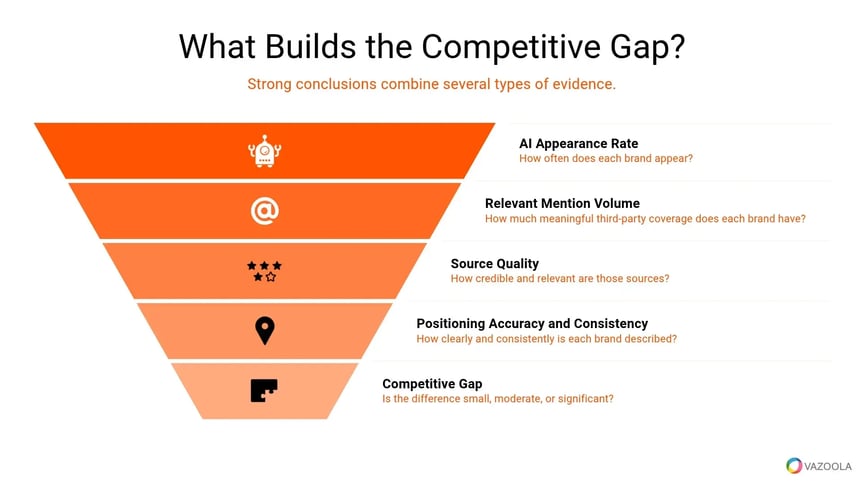
Classify the gap as small, moderate, or significant. A small gap may involve several missing placements or one underdeveloped topic, while a significant gap usually reflects broader differences in authority and third-party coverage. Avoid promising a quick reversal based on a single score.
Competitive data gives an agency a concrete way to discuss the issue with a client.
“Competitors appear more often” lacks direction, while “Competitor A appeared in 40% of tests and earned mentions from six relevant publications” identifies a measurable gap. The second statement also helps the team estimate priorities and timing.
When the client and a competitor appear in the same answer, note how the platform distinguishes them. Repeated contrasts involving price, specialization, or company size can reveal positioning gaps that raw mention counts miss.
What to Do With the Findings
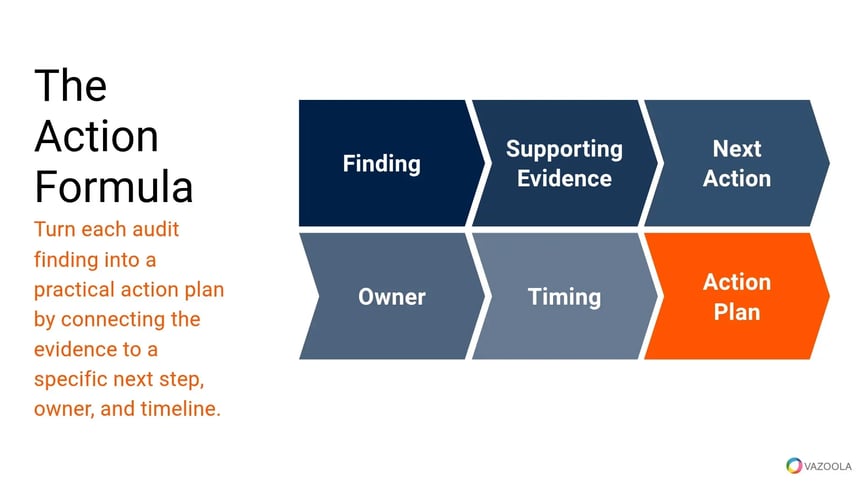
At this point, you have the raw material. The next task is turning it into a summary the team or client can act on. Condense the audit into a one-page working document. Organize the evidence under citation presence, mention footprint, and competitive gap.
Connect each category to a practical response:
-
Low citation presence: Improve content coverage and build mentions around the missing queries.
-
Weak mention footprint: Strengthen off-page outreach and pursue coverage from relevant, credible sources.
-
Inaccurate brand descriptions: Correct owned content and outdated third-party listings.
-
Large competitive gap: Prioritize the highest-value queries and establish a realistic timeline with the client.
Tie every recommendation to observed evidence. Research on generative engine optimization found that tested optimization methods increased source visibility by as much as 40% in benchmark experiments, although results varied by subject.
The finding supports careful experimentation, but it does not guarantee a particular result for every brand.
Keep your report brief enough to guide a working conversation. Agencies can use it when discussing AI visibility services with existing SEO clients, but the audit should remain diagnostic rather than promotional. Its job is to show where the client stands and what deserves attention next.
How Often to Run the Audit
The first audit establishes a baseline, but its value grows when you repeat it under similar conditions.
Run the full snapshot quarterly. Monthly checks make more sense when a team is actively publishing content, earning mentions, or correcting brand information. Use the same prompts, platforms, scoring rules, and competitor set whenever possible.
Track several measurements over time:
-
Citation frequency across the fixed query set
-
The number of accurate brand mentions
-
Growth in relevant third-party coverage
-
Changes in the competitive gap
-
Recurring inaccuracies or outdated descriptions
A single change may reflect normal variation in an AI-generated answer. Look for movement across several queries, platforms, and audit periods before declaring progress. Repeatable patterns provide more useful evidence than one unusually favorable response.
Keep most prompts unchanged for reliable comparisons, but reserve one or two slots for emerging customer questions. A small rotating set can capture new language and concerns without weakening the historical baseline.
Bottom Line: What the AI Visibility Audit Means
An hour is enough time to replace assumptions with a usable baseline. The audit shows whether AI platforms recognize the brand, which sources shape that recognition, and where competitors hold an advantage.
A concise scorecard then turns those findings into focused content and authority-building work.