

Jul 26, 2019

Casey Bjorkdahl is one of the pioneering thought leaders in the SEO community. In 2010, Casey co-founded Vazoola after working for a Digital Marketing Agency for five years in New York City. Vazoola is now one of the fastest growing and most widely recognized SEO marketing firms in the country.


Brand awareness used to sound like a top-of-funnel goal: Get a name in front of more people, make it memorable, and hope recognition turns into clicks or sales later.
Search and AI have changed those mechanics. A brand also needs to become visible to the systems people use to discover, compare, and evaluate products, services, and ideas.
Search rankings still matter, but they no longer tell the whole story.
A 2026 benchmark of 828 enterprise B2B companies found that AI Overviews appeared in about half of the search results where those brands ranked, while the median company was cited in only 3% of relevant AI Overviews.
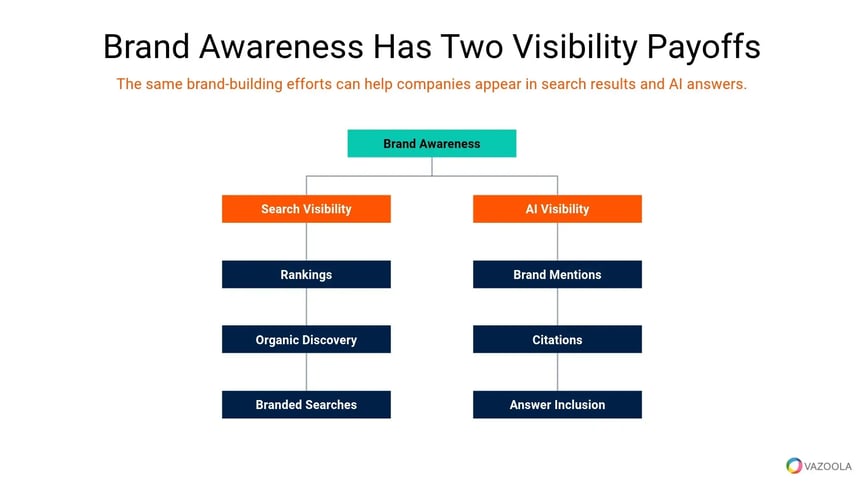
Brand awareness now has two connected payoffs: stronger traditional search visibility and a better chance of appearing in AI-generated answers.
Key Takeaways
-
Many of the same activities can support search rankings and AI citations at the same time.
-
Strong third-party mentions can reinforce authority while creating more opportunities for brands to appear in AI-generated answers.
-
Clear, well-structured content helps search engines and AI systems interpret what a page covers.
-
Community participation, reviews, and other off-site signals strengthen brand awareness beyond a company's own website.
-
Agencies can get a clearer picture of performance by tracking traditional search visibility alongside AI mentions and citations.
Table of Contents
Grow Brand Visibility Across Search and AI
Brand awareness becomes more valuable when it leaves behind evidence. Search engines can discover links, mentions, reviews, and useful content, while AI systems can encounter information about a brand across websites, publications, directories, forums, and other accessible sources.
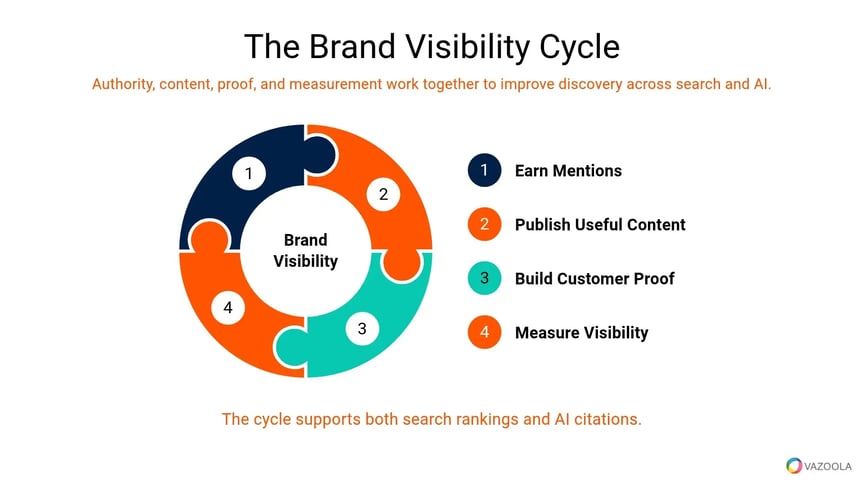
Agencies can approach the work as one connected process instead of maintaining separate SEO and AI visibility playbooks. A practical strategy usually involves:
-
Earning authoritative third-party mentions that reinforce what the brand is known for.
-
Publishing clear, current content that answers questions the target audience actually asks.
-
Encouraging authentic discussion and customer proof beyond the brand's own website.
-
Measuring whether those efforts improve search visibility and inclusion in AI answers.
The benefit of this approach is efficiency. A useful mention, a strong page, or a credible customer review can serve more than one visibility goal instead of supporting only a single channel.
Earn Mentions That Move Rankings and Get Cited by AI
Digital PR, guest contributions, expert commentary, and independent coverage have long supported SEO through relevant backlinks and broader discovery. The same earned visibility can also put a brand into the body of information that AI systems encounter when answering questions.
A 2026 study spanning legal, health care, SaaS, financial services, and e-commerce brands found that referring domains and third-party web mentions had the strongest relationships with AI visibility. The research also found that 89% of measured brands never appeared in category-research answers, even though AI platforms could accurately describe most of them when asked directly.
The lesson is not to chase mentions anywhere they are available. Relevance, authority, context, and consistency matter.
Vazoola's brand mentions service focuses on building that broader third-party presence, while LLM seeding extends the same principle to sources and conversations that can influence AI discovery.
Before pursuing a placement, ask whether the source would make sense to a real buyer researching the topic. The filter keeps digital PR focused on visibility that can support trust, search performance, and AI discovery.
Structure Content for Both Search Rankings and AI Citations
Strong off-site signals still need useful owned content behind them. Clear headings, concise answers, descriptive subheads, appropriate schema, and logical page structure help people and machines understand what a page covers.
Formatting alone doesn’t guarantee rankings or citations, but it removes unnecessary friction. A page that answers a specific question directly and supports the answer with useful context gives search and AI systems clearer information to interpret, surface, or cite.
Freshness needs context, too. Changing a publication date without improving the page provides little value. Agencies should revisit facts, examples, screenshots, statistics, links, and outdated recommendations when refreshing important content.
Add content-refresh checks to the editorial calendar. Quarterly or semiannual reviews of high-value pages can catch outdated claims before they undermine usefulness or trust.
Strengthen Brand Signals Beyond Your Own Website
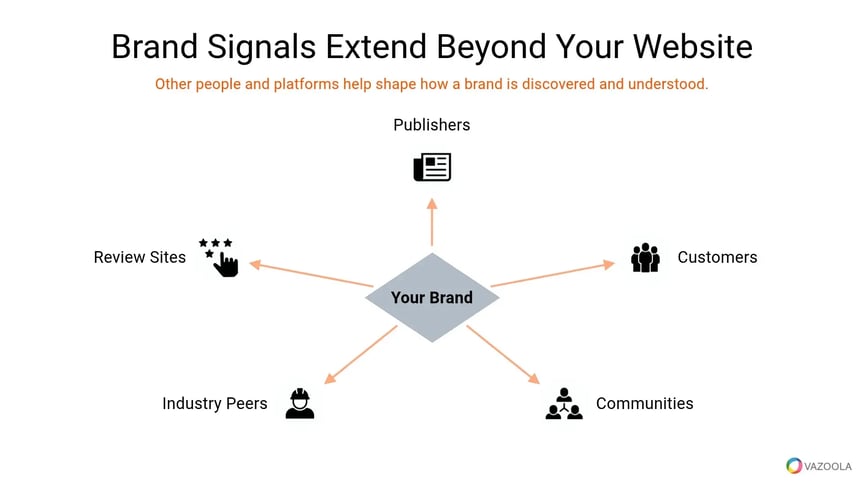
A brand cannot build awareness entirely on its own domain. Customers, industry peers, publishers, and community members create an external record of how a company is discussed and understood.
Such signals can create new discovery paths, encourage branded searches, and provide independent context beyond a company's own claims. Agencies should look beyond backlink acquisition and consider where genuine conversations about each client already happen.
Build Community Presence That Search and AI Both Reward
Niche communities can influence visibility even when a conversation never produces a traditional editorial backlink. Forums, professional groups, Q&A sites, and public discussion threads can introduce a brand to new people while creating searchable conversations around problems, products, and experiences.
Community participation works best when a brand contributes something useful. Repeated promotional drops can damage trust, but helpful answers, expert participation, and transparent discussion can encourage the branded searches, mentions, and referrals that grow awareness over time.
Prioritize communities where your client’s audience already asks detailed questions and shares real experiences. A smaller, active niche forum can produce stronger visibility signals than a much larger group with little relevance to the brand.
Agencies can make community participation more useful by focusing on activities such as:
-
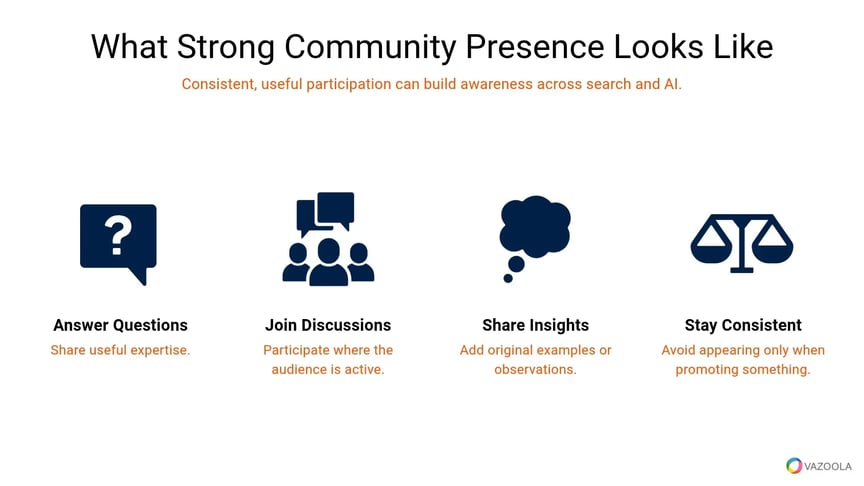
Answering recurring questions where the brand has genuine subject-matter expertise.
-
Sharing original data, examples, or observations that add something new to the discussion.
-
Participating consistently instead of appearing only when there is something to promote.
-
Watching recurring community questions for ideas that can improve future site content.
Community activity can therefore inform content strategy as well as distribution. Questions that surface repeatedly in forums or professional groups often reveal gaps in existing search content.
Turn Customer Trust Into Visible Proof
Reviews and testimonials turn customer experience into public evidence. They can influence local visibility, support conversion decisions, and give prospective customers independent information to compare with a brand's own marketing.
Third-party reviews and directories can also provide context for AI-generated comparison and recommendation answers. Agencies can help clients make authentic review generation part of the customer experience instead of treating it as an occasional reputation campaign.
Referrals extend that effect. A private recommendation can lead to branded searches, direct visits, public discussions, and future reviews. Customer trust becomes more visible when people can find evidence of it.
Encourage customers to describe the specific problem they solved, the result they achieved, or the experience that stood out. Detailed reviews and testimonials give prospective buyers more useful context and create stronger signals than vague praise alone.
Track Visibility Across Search and AI Answers
Measurement needs to expand with the channels. Rankings and organic traffic still matter, but they describe only part of how audiences can now encounter a brand.
A broader reporting framework can monitor:
-
Search rankings and changes in organic visibility.
-
Branded search demand and search share of voice.
-
Backlinks and referring domains that increase third-party exposure.
-
Brand mentions within AI-generated answers.
-
URLs and outside sources that AI platforms cite when discussing the brand.
-
Differences in visibility across AI platforms, query types, and reporting periods.
Interest in those measurements is growing. U.S. searches for "AI search tracking" had risen 184% over the previous year, while searches for "AI rank tracking" increased 175%, based on Ahrefs Keywords Explorer data.
The shift underscores why agencies need reporting that reaches beyond traditional search visibility.
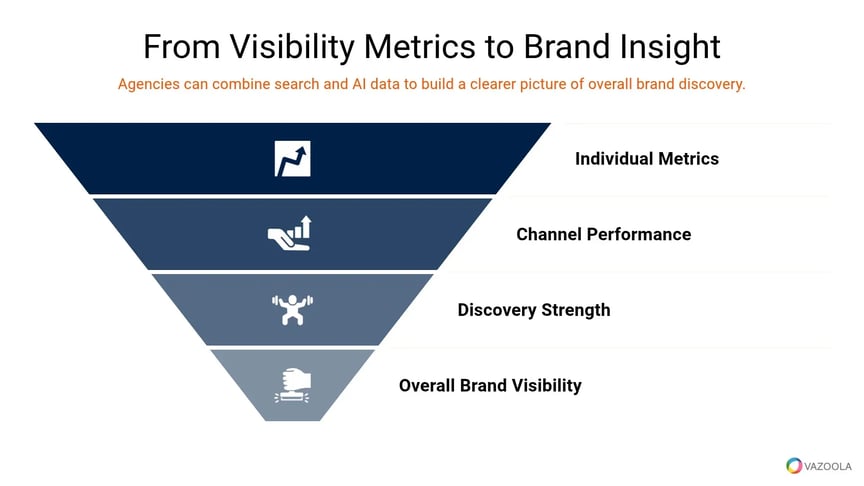
Agencies do not need to collapse every metric into one score since rankings and AI citations represent different outcomes. Reporting them side by side makes it easier to show clients whether visibility work is improving discovery across both environments.
Brand Awareness Is Now a Two-Front Strategy
Brand awareness increasingly depends on whether people and discovery systems encounter the same clear, credible story about a company. Earned mentions, useful owned content, community participation, reviews, and referrals can reinforce that story across search results and AI answers.
Agencies can use the overlap to simplify strategy instead of doubling the workload. Techniques such as LLM seeding fit into a larger effort to establish accurate, relevant brand information across sources that audiences already use and trust.
A broader visibility strategy also gives clients a more durable way to think about brand awareness. Rankings will shift, AI citation patterns will change, and new discovery platforms will emerge. Credible visibility across the web remains a foundation that can support all of them.
Ready to strengthen your clients' visibility across search and AI? See how Vazoola can help turn brand-awareness efforts into a more consistent presence across the web.