

Jul 31, 2026

Casey Bjorkdahl is one of the pioneering thought leaders in the SEO community. In 2010, Casey co-founded Vazoola after working for a Digital Marketing Agency for five years in New York City. Vazoola is now one of the fastest growing and most widely recognized SEO marketing firms in the country.


A client enters a renewal meeting with a question the account team didn’t expect: “How are you helping us appear in AI-generated results?”
The agency has dashboards for rankings, traffic, and backlinks. It has no clear answer for AI visibility. A once-routine renewal suddenly becomes a test of whether the agency can keep pace with the client’s changing priorities.
The same gap can surface during a pitch or account review. Another agency may offer similar SEO and link-building capabilities while presenting a more complete plan for earned media and AI discovery. Revenue then slips away through a lost contract, a reduced scope, or an upsell that was never offered.
A 2026 Institute of Practitioners in Advertising report found that nine in 10 surveyed brand-side decision-makers considered AI skills critical or very important when evaluating creative and media agencies. Digital PR gives agencies a practical way to address that expectation without abandoning the services they already provide.
Key Takeaways
-
Agencies risk appearing reactive when they can’t address questions about AI visibility.
-
Competitive pitches become weaker when another firm connects earned media with emerging discovery channels.
-
Existing clients may provide the clearest opportunity for digital PR expansion.
-
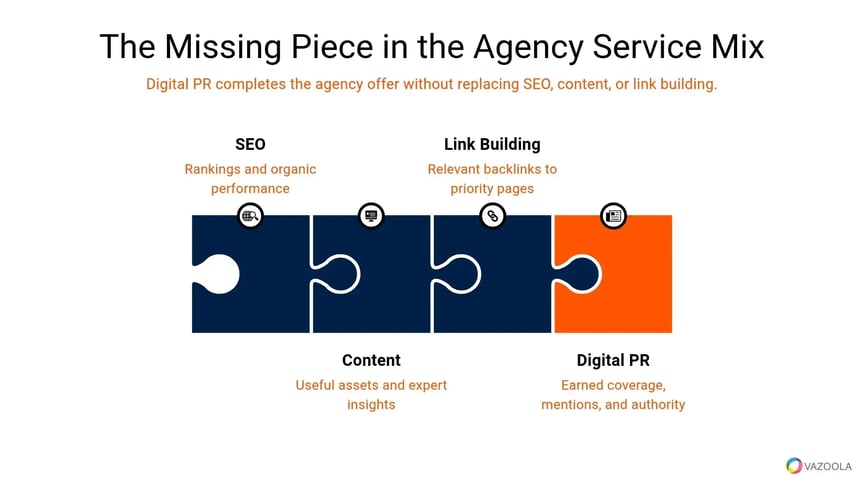
Digital PR complements SEO and link building rather than replacing either service.
-
Agencies should estimate the opportunity using their own account and pricing data.
Table of Contents
What ‘Doing Nothing’ Actually Costs an Agency
Doing nothing doesn’t guarantee that an agency will lose an account. The risk grows when clients raise a new business concern and the agency can’t provide a useful perspective, service, or next step.
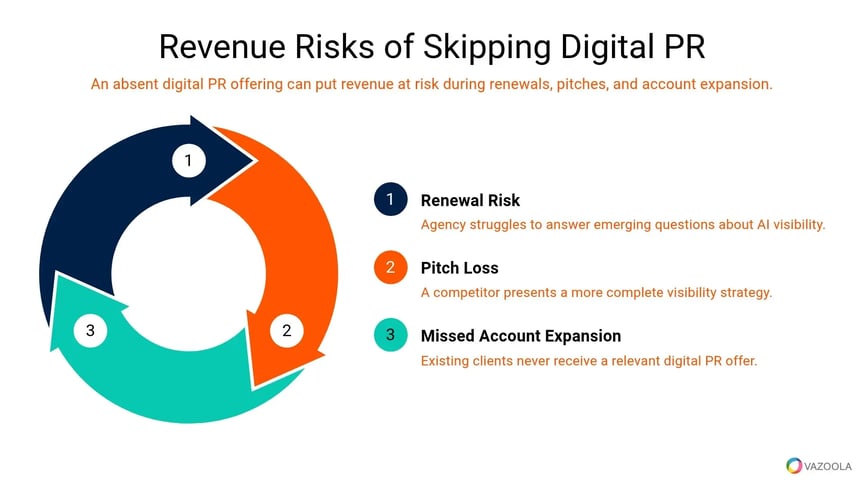
Revenue can leak from three parts of the client relationship:
-
Renewals: A current client questions whether the agency can support emerging visibility goals.
-
Pitches: A competitor presents a more complete response during an RFP or discovery call.
-
Account expansion: An existing client would consider digital PR, but the agency never offers it.
Renewal Risk
Renewals give clients an opportunity to assess past performance and future value. Strong rankings and backlinks still matter, but clients may also want to know how their brands can earn visibility beyond traditional search results.
An agency that waits for the question can appear unprepared. Account teams can reduce that risk by introducing the subject during planning conversations and developing a framework to sell AI visibility as a service.
No reliable benchmark shows that a missing digital PR offer causes a specific churn rate. Agencies can find more useful evidence by reviewing:
-
Lost-account notes that mention innovation, visibility, or strategic gaps.
-
Client surveys that identify unmet marketing needs.
-
Requests that fell outside the agency’s current scope.
-
Renewal calls where clients asked about AI search or earned media.
-
Scope reductions that followed concerns about future strategy.
Patterns across those sources can reveal whether the capability gap already affects retention.
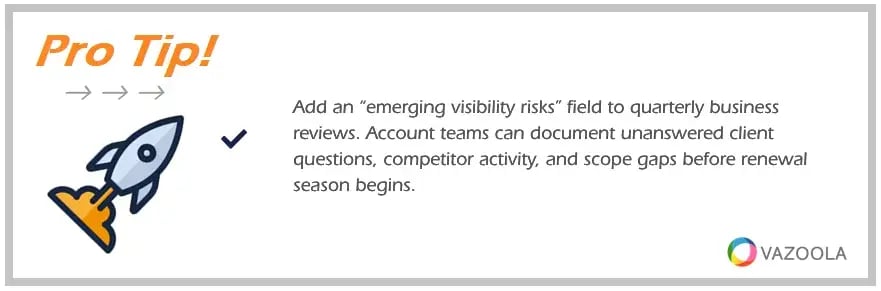
Add an “emerging visibility risks” field to quarterly business reviews. Account teams can document unanswered client questions, competitor activity, and scope gaps before renewal season begins.
Pitch Loss
A pitch creates a more immediate comparison. Two agencies may offer similar content, SEO, and backlink services, but only one explains how earned media supports visibility across search engines, news sites, and AI-generated answers.
A stronger pitch can show how the agency will:
-
Earn authoritative third-party coverage.
-
Secure relevant brand mentions and backlinks.
-
Connect digital PR with existing SEO goals.
-
Measure results without promising guaranteed AI placements.
-
Adapt the strategy as discovery behavior changes.
Pitch losses also carry significant costs. Research from the ANA and 4As found that a nonincumbent agency spent an average of $204,461 participating in a pitch. Incumbent agencies spent an average of $406,092 defending an account.
The research didn’t isolate digital PR as a deciding factors, but the figures still show why preventable proposal gaps matter. Agencies invest too much in new business to let an unanswered question weaken an otherwise competitive pitch.
Run a capability-gap review before every major pitch. Assign one team member to evaluate the proposal from a competitor’s perspective and flag any client concern the deck doesn’t answer. The review should happen before pricing is finalized, while the agency can still adjust the scope.
Upsell Left on the Table
Current clients may present the easiest path to digital PR revenue. The agency already understands their audiences, competitors, approval processes, and content priorities. Trust also exists, which can reduce the friction involved in introducing a new service.
An agency shouldn’t rely on a universal upsell estimate. Digital PR pricing varies based on campaign scope, research requirements, media outreach, and reporting.
A simple internal calculation can provide a more useful forecast:
-
Identify accounts with a clear need for earned visibility.
-
Estimate how many would consider a digital PR pilot.
-
Apply the agency’s actual monthly or project fee.
-
Multiply the result by the likely contract length.
-
Compare the potential revenue with delivery costs and margins.
The result won’t guarantee revenue, but it will show whether the opportunity deserves further testing.
Start with clients that already invest in content, link building, or thought leadership. Upcoming launches, original research, and strong internal experts can provide natural openings for earned-media campaigns.
Why This Gap Is Opening Now, Not Later
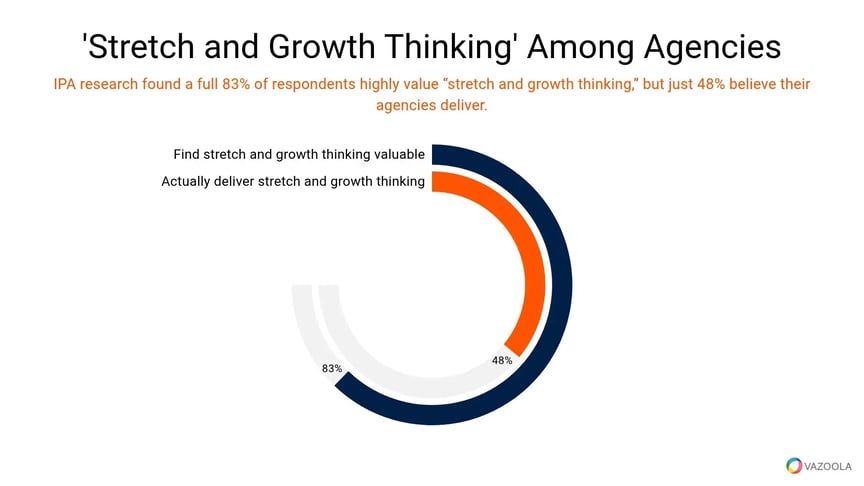
Client expectations are shifting faster than many agency service menus. The IPA research found that 83% of respondents highly valued “stretch and growth thinking,” while only 48% believed their agencies delivered it.
Digital PR gives agencies a way to demonstrate that forward-looking guidance. The discussion can remain grounded in familiar business outcomes, including:
-
Greater visibility in credible publications.
-
Stronger brand authority and recognition.
-
More opportunities to earn relevant backlinks.
-
Broader exposure across search and AI-generated answers.
-
A clearer connection between PR, SEO, and content strategy.
Waiting creates a competitive disadvantage. Other agencies gain time to refine their messaging, build case studies, and include AI visibility in proposals. Early testing lets a firm learn what clients value before the capability becomes a routine requirement.
The goal isn’t to chase every AI trend, either. Agencies need a credible answer when clients ask how earned authority and third-party recognition fit into a changing search environment.
Digital PR Closes the Gap — Here’s Why
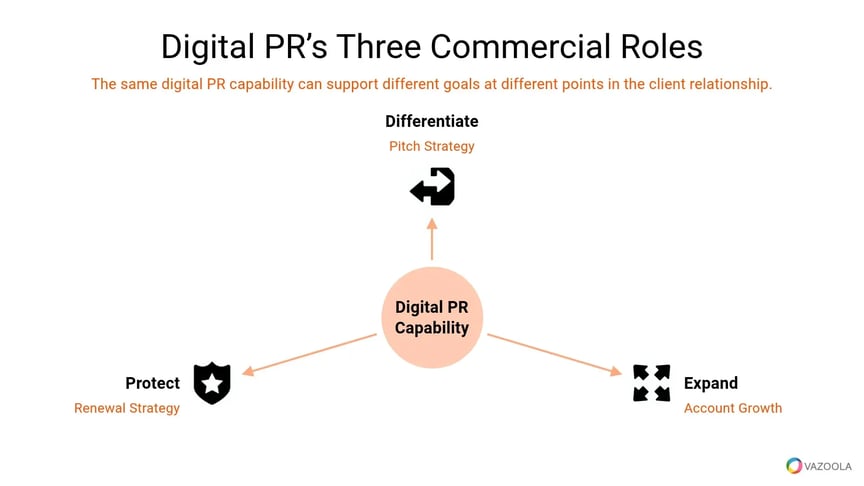
Digital PR addresses each revenue leak from a different angle:
-
During renewals, it gives account teams a forward-looking strategy to discuss.
-
During pitches, it demonstrates broader expertise and stronger differentiation.
-
Within current accounts, it creates a logical path to expanded scope and revenue.
Earned campaigns can generate authoritative coverage, relevant brand mentions, and backlinks. Each outcome can support broader search, reputation, and discovery goals.
Our guide to digital PR for AI search explains how those signals may influence AI visibility. Agencies can use the resource for their technical discussion while keeping client proposals focused on commercial outcomes.
Traditional link building still has an important role, too. It can support priority pages, strengthen topical authority, and improve organic performance. Digital PR adds broader earned visibility instead of replacing focused backlink acquisition.
What Closing the Gap Looks Like in Practice
Adding digital PR doesn’t require an agency to discard its current operating model. Existing content strategists, subject-matter experts, and outreach specialists may already handle parts of the process.
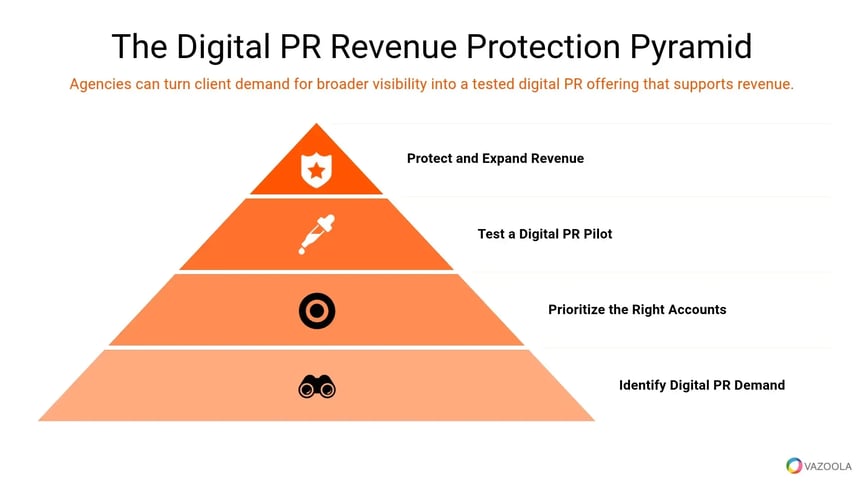
Agencies can begin with a limited rollout:
-
Review current accounts for clear earned-media opportunities.
-
Define a narrow pilot instead of launching a full service line.
-
Build the offer around capabilities the team already has.
-
Set realistic goals for coverage, mentions, links, and visibility.
-
Track demand, delivery hours, margins, and client feedback.
A content-focused agency might begin with expert commentary or original research. Meanwhile, a link-building agency might expand into newsworthy campaigns and media outreach. The service should grow from capabilities the team already understands.
Our guide to link building and GEO for agencies provides a more detailed implementation framework. Agencies can use it to connect new visibility services with established workflows.
Protect Agency Revenue Before the Gap Widens
The cost of ignoring digital PR doesn’t appear on a single invoice. It emerges through renewals that become harder to defend, pitches that lack differentiation, and client relationships that stop growing.
Agency leaders can begin by reviewing recent client conversations. Renewal notes, proposal feedback, and unmet requests may already show where earned media could strengthen the existing offer.
Digital PR gives agencies another way to demonstrate relevance while reinforcing their SEO and link-building work. Agencies evaluating the opportunity can review Vazoola’s digital PR services before deciding how they should fit into their client strategy.
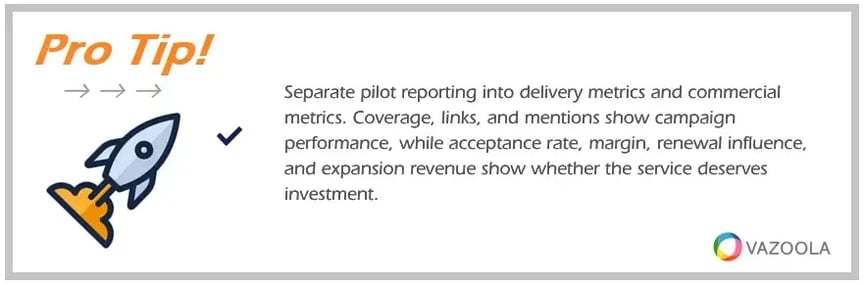
Separate pilot reporting into delivery metrics and commercial metrics. Coverage, links, and mentions show campaign performance, while acceptance rate, margin, renewal influence, and expansion revenue show whether the service deserves investment.