

Jul 30, 2026

Casey Bjorkdahl is one of the pioneering thought leaders in the SEO community. In 2010, Casey co-founded Vazoola after working for a Digital Marketing Agency for five years in New York City. Vazoola is now one of the fastest growing and most widely recognized SEO marketing firms in the country.


Have you been here?
The renewal call is moving smoothly until the client drops a sentence that changes the whole tone of the room: “We need to cut the SEO budget.”
Suddenly, every placement, target page, and campaign forecast is on the table. The request may come from weaker revenue, rising acquisition costs, a new executive priority, or pressure to move funds into another channel.
Recent guidance on SEO budget conversations recommends connecting organic search spending to business outcomes, customer acquisition costs, and the financial risks of losing visibility.
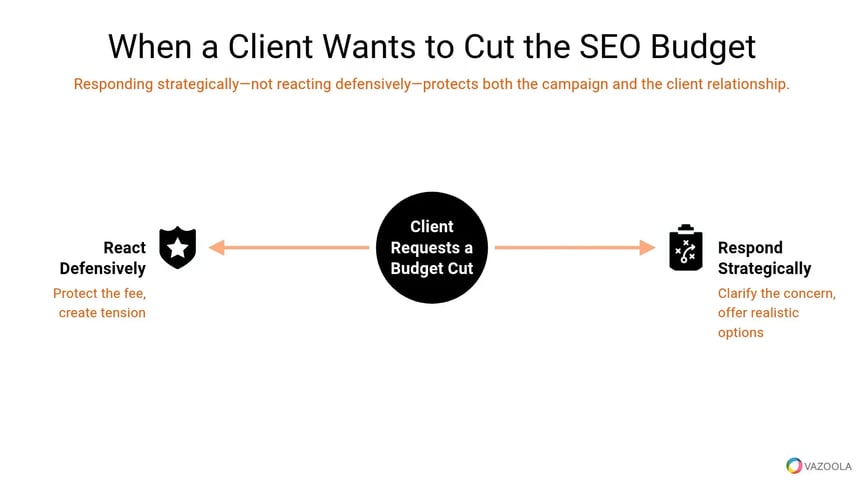
A rushed defense can make the agency sound more concerned about preserving revenue than solving the client’s problem. A better response uncovers what prompted the request, shows what a smaller monthly SEO budget can realistically support, and gives the client clear choices.
The conversation becomes less about holding the line and more about protecting the strongest possible strategy.
Key Takeaways
-
Diagnose the request before defending the budget. The client may have a financial problem, a performance concern, or both.
-
Translate the proposed cut into operational consequences. Show which campaigns, placements, target pages, and opportunities would be affected.
-
Protect quality before volume. Fewer strong links usually make more sense than maintaining link counts with weaker placements.
-
Offer a smaller strategy rather than the same strategy at a discount. Revised pricing should come with revised scope and expectations.
-
Document the decision. Record the new deliverables, goals, timelines, and review date before changing the campaign.
Table of Contents
Why This Conversation Comes Up
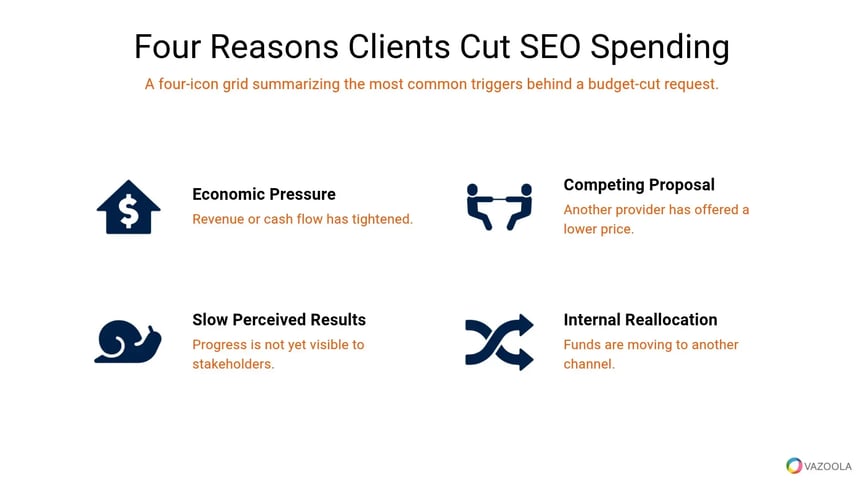
A request to cut spending could have little to do with the agency’s performance. The client could be facing tighter cash flow, weaker sales, or pressure to move funds toward paid media, events, or product launches.
A competing provider might also have promised similar results for less. The lower quote can make an established campaign appear expensive, even when the competing scope, link quality, or methodology differs.
Slow perceived progress creates another trigger. Link acquisition requires research, content development, prospecting, outreach, negotiation, and follow-up. Clients who only review monthly placement totals may not see the work already moving through the pipeline.
Start by asking what changed. A calm question such as, “What is driving the reduction?” can reveal whether the real issue involves finances, performance, reporting, expectations, or an internal decision.
What the Right Budget Actually Looks Like
No universal monthly SEO budget works for every company. The appropriate investment depends primarily on competition and growth goals.
Our link-building pricing guide provides a fuller breakdown, with examples of monthly costs ranging from about $3,900 to $35,000 across different authority tiers. After all, a company pursuing competitive national keywords generally needs more resources than a local company targeting a narrow service area.
Two factors should guide the initial budget discussion:
-
Competition: Consider the authority of competing pages, the number and quality of their referring domains, and the strength of the client’s existing backlink profile.
-
Goals: Compare a focused campaign supporting several priority pages with an aggressive program targeting multiple product categories or national keywords.
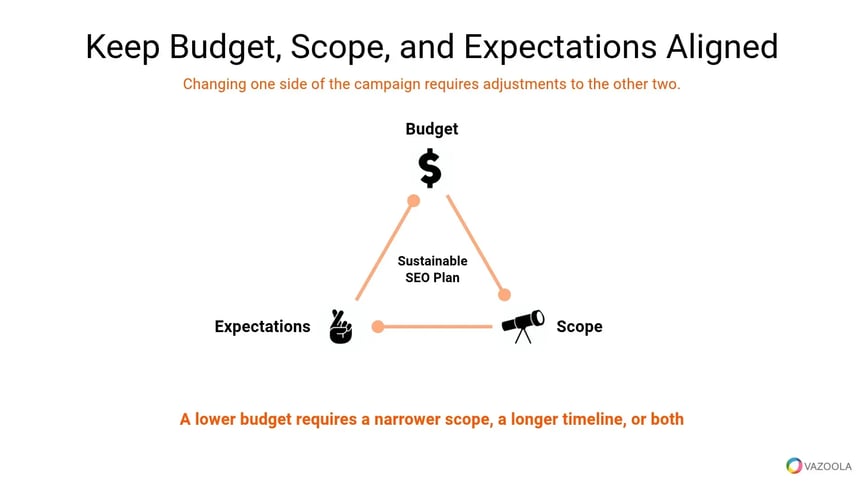
A lower budget may remain viable. However, the reduction will often extend the timeline, narrow the scope, or decrease monthly link volume.
Build a “minimum effective budget” before the client ever asks for a cut. Knowing the lowest amount that can still support credible work prevents you from inventing a reduced plan under pressure.
Before the Conversation: Know What You’re Defending
Preparation helps an agency respond with evidence rather than emotion. Walking into the discussion without clear data can make the response sound like an attempt to protect a fee.
Gather Performance Evidence
Bring results that connect link acquisition to the outcomes established at the start of the engagement. Avoid relying only on domain metrics or placement totals.
Useful data may include:
-
Ranking movement for priority keywords and pages
-
Qualified organic traffic growth
-
Visibility gains against named competitors
-
Referring domains earned for strategically important pages
Clients usually care more about business movement than changes in an isolated SEO score. You should connect campaign activity to the measures they already use to assess marketing performance.
Review Work Already in Motion
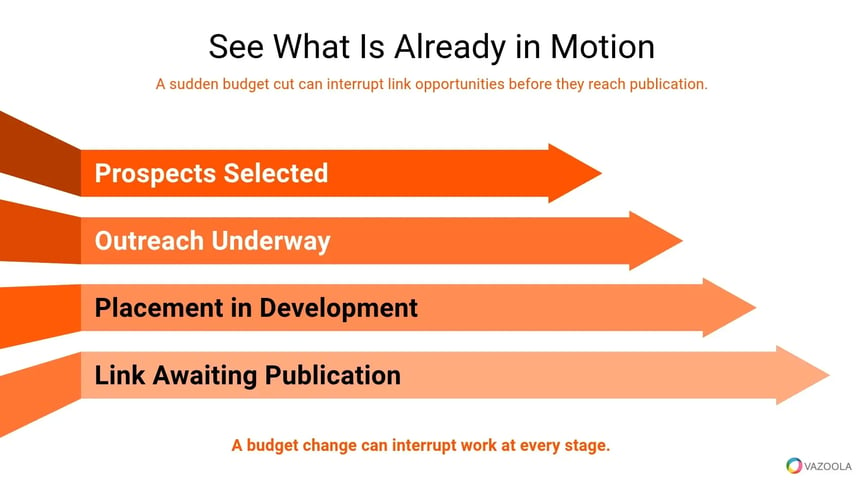
Check the campaign pipeline before agreeing to a reduction. Outreach conversations, approved content, publisher negotiations, and pending placements may continue producing results after the reporting period ends.
Separate active opportunities by stage. Show which placements are close to publication, which require more follow-up, and which remain in the research phase.
A pipeline review helps the client understand what has already been funded. A placement approaching publication carries a different cost than an opportunity that hasn’t moved beyond initial research.
Define What the Cut Will Stop
Prepare specific scenarios for different reduction levels. General warnings about losing momentum rarely provide enough information for a sound decision.
Depending on the size of the cut, the revised campaign may require:
-
Fewer target pages
-
Lower monthly outreach volume
-
Fewer content assets
-
Longer acquisition timelines
-
A narrower range of outreach tactics
-
Reduced support for secondary products or services
Specific consequences make each option easier to compare. The client should understand what each reduced budget would change before selecting an option.
Review who inside the client’s company benefits most from organic growth, then tailor your evidence to that stakeholder. A finance leader may care about acquisition costs, while a sales leader could respond more strongly to pipeline and lead quality.
How to Respond When a Client Asks to Cut the SEO Budget
The conversation should then move from diagnosis to options. The following steps keep the response practical without turning it into a script:
Identify the real concern.
Determine whether the request stems from financial pressure or disappointing results. Budget constraints require reprioritization, while performance concerns call for a closer review of goals, execution, timelines, and reporting.
Ask whether stronger results would change the client’s decision. The response can reveal whether cost or confidence is driving the request.
Explain what the budget funds.
Show how the current investment supports prospect research, content creation, outreach, follow-up, publisher evaluation, negotiation, and quality control.
Connect those activities to placements, rankings, visibility, and leads. Clients should understand what the budget produces rather than how the agency spends the money.
Clarify the cost of slower momentum.
Explain how a reduction could slow link acquisition and extend the projected timeline. A pause may also give competitors more time to strengthen their backlink profiles.
Mention opportunities that could disappear, such as seasonal stories, media requests, publisher openings, and active outreach conversations.
Offer a workable lower tier.
Reduce the scope rather than providing the same work for less. A smaller plan might focus on fewer target pages, one service category, or a narrower range of outreach methods.
Clearly state what remains included and what will stop. The client should understand the trade-offs before choosing the revised plan.
Protect quality before volume.
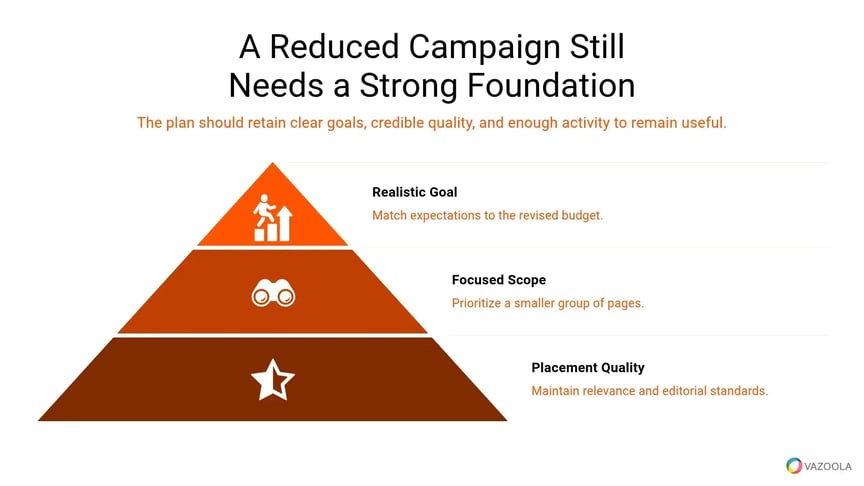
Don’t maintain the same link count by accepting weaker placements. Preserve relevance, editorial standards, audience fit, and site quality, even when monthly volume falls.
Google’s spam policies for web search identify manipulative linking practices as potential policy violations. Our guidance on white hat link-building services also supports prioritizing credible placements over inflated link totals.
Give the client two revised options instead of one take-it-or-leave-it recommendation. A choice between a focused maintenance plan and a slower growth plan keeps the discussion centered on strategy rather than price alone.
When to Agree to the Cut
Not every reduction should be resisted. A smaller program can be the right decision when the client’s financial position, website condition, or campaign stage has changed.
The Client Needs Temporary Financial Relief
A client facing a genuine cash-flow problem may need to reduce spending across several channels. Preserving a smaller campaign can maintain continuity while respecting the company’s financial limits.
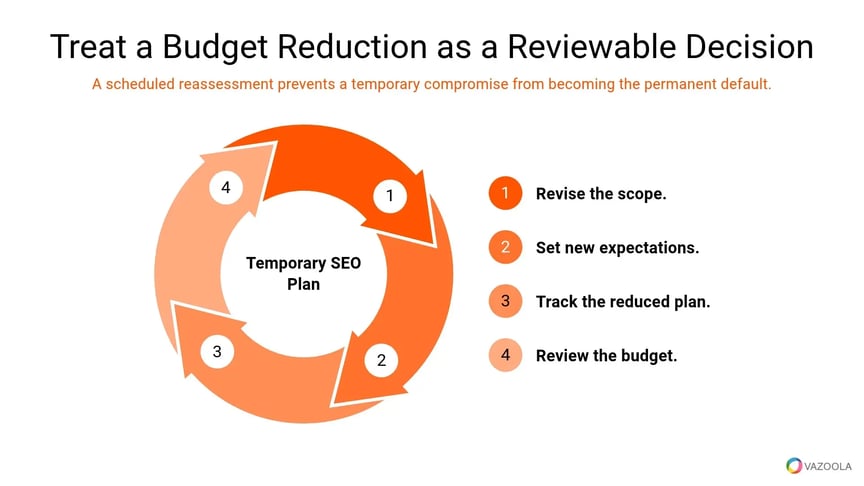
Set a review date rather than leaving the reduced scope open-ended. The date creates a natural point to revisit performance, priorities, and available resources.
The Campaign Needs a Narrower Focus
A client may no longer need to support every service line or target page. Concentrating the available budget on a limited set of priorities can produce better results than spreading it thinly across the full site.
The revised plan should identify exactly which pages remain active. Goals tied to removed pages should also be eliminated from the revised forecast.
Other SEO Problems Need Attention First
Link building can’t compensate for severe technical issues, poor search intent alignment, weak content, or pages that fail to convert. Redirecting part of the SEO budget may make sense when those problems block campaign performance.
Pausing all activity isn’t always necessary. A reduced outreach program can preserve momentum while the client fixes more urgent website problems.
The Remaining Budget Can’t Support Credible Work
A complete pause may be better than selling a program with little chance of producing meaningful results. An agency should explain where the minimum workable threshold sits and why.
Honest guidance protects the relationship. A weak campaign may preserve short-term revenue, but it can create larger problems when the client expects results the revised investment can’t support.
Before agreeing to a cut, confirm that the new plan still includes:
-
A clearly defined campaign goal.
-
Enough resources to maintain placement quality.
-
A focused group of target pages.
-
Realistic delivery and performance timelines.
-
Updated reporting expectations.
-
A date for reviewing the reduced budget.
FAQs About Cutting Link-Building Budgets
Should link building be the first line item cut when a client reduces overall marketing spend?
No channel should be cut automatically. Review link building alongside other investments based on performance, strategic importance, and competitive pressure.
How much can a link-building budget be scaled down before it stops producing meaningful results?
The threshold depends on the market, goals, and cost of maintaining quality. A budget becomes too low when the agency must sacrifice placement standards, spread resources too thinly, or promise an unrealistic timeline.
Is it better to pause link building or reduce monthly volume?
Reducing monthly volume usually preserves campaign continuity, active outreach, and publisher relationships. A full pause may make more sense during serious financial pressure or while the client fixes higher-priority website problems.
What should an agency tell a client who wants the same results with a smaller budget?
Explain how the lower budget changes the scope, timeline, or expected output. The client may need to choose between fewer target pages, fewer links, or a longer path to the same goal.
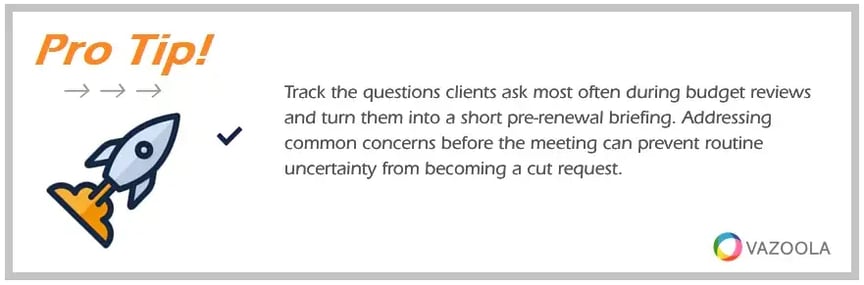
Track the questions clients ask most often during budget reviews and turn them into a short pre-renewal briefing. Addressing common concerns before the meeting can prevent routine uncertainty from becoming a cut request.
Protect the SEO Strategy and the Client Relationship
Budget conversations are relationship moments as much as financial negotiations. Strong agency partnerships don’t depend on winning every discussion. They depend on listening carefully, sharing accurate information, and providing workable choices.
A smaller campaign can still succeed when both sides agree on priorities and expectations. Agencies evaluating a revised execution plan can consider scalable link-building services without abandoning quality standards.
The same planning principles apply when an account is ready to expand rather than contract. Our guide to selling AI visibility can support our link-building services once the related resource becomes available.
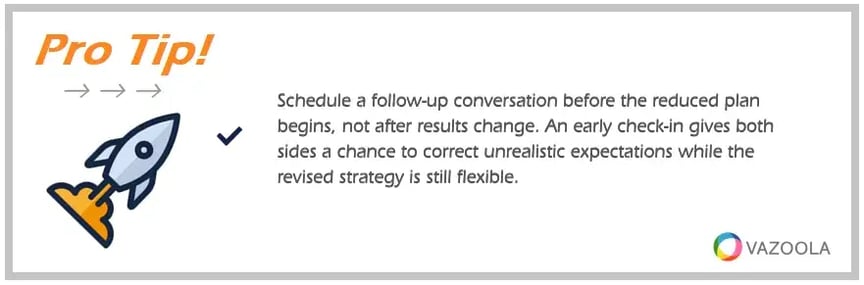
Schedule a follow-up conversation before the reduced plan begins, not after results change. An early check-in gives both sides a chance to correct unrealistic expectations while the revised strategy is still flexible.