

Oct 30, 2026

Casey Bjorkdahl is one of the pioneering thought leaders in the SEO community. In 2010, Casey co-founded Vazoola after working for a Digital Marketing Agency for five years in New York City. Vazoola is now one of the fastest growing and most widely recognized SEO marketing firms in the country.


Buying backlinks for one website can get complicated. Managing link-building spend across several client accounts raises the stakes even higher. Agencies have to balance quality, relevance, budget, client expectations, and their own margins every time they approve a placement.
Understanding the broader types of backlinks provides a useful foundation. But agencies making purchasing decisions need to go even further. The real question is which links are worth buying for a particular client and what each placement should accomplish.
The answer rarely involves buying more of the same link. A strong agency strategy mixes formats based on what the client needs most.
Key Takeaways for Agencies Buying Backlinks
-
Guest posts offer strong control over content, context, target pages, and anchor placement.
-
Niche edits can provide a faster route to contextual links on established pages, provided the page and publisher meet quality standards.
-
Sponsored content can generate referral traffic and brand exposure, but agencies should not treat it as a straightforward ranking tactic.
-
Digital PR and brand mentions can broaden visibility beyond conventional search rankings, including within AI-driven discovery.
-
White-label programs can help agencies scale link acquisition without absorbing the full operational workload in-house.
Table of Contents
Links Agencies Should Actually Be Buying
A $500 link can be a smart purchase for one client and a poor use of budget for another. A less expensive placement may produce more value when the page, audience, and context better align with the client's goals.
Agencies should also distinguish between paid visibility and attempts to buy ranking credit, since Google considers links purchased primarily to manipulate rankings a form of link spam.
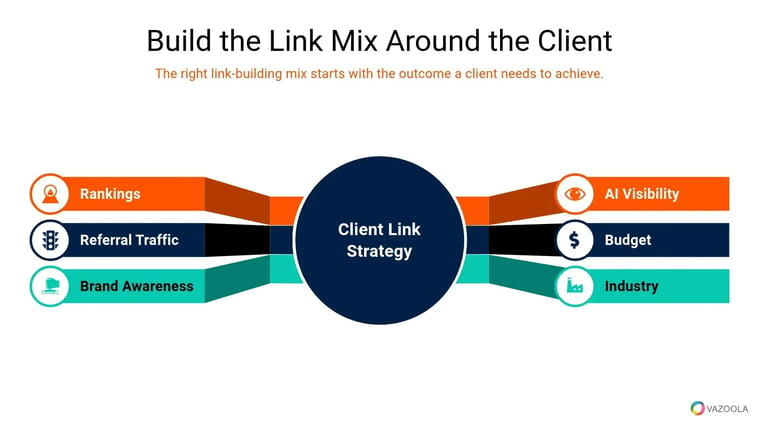
Therefore, it’s important to stop treating backlinks like interchangeable units. Rankings may lead the strategy for one campaign, while another client may care more about referral traffic, brand exposure, AI visibility, or a combination of outcomes.
The format matters, but the purpose comes first.
1. Guest Posts
Guest posts remain one of the most flexible link purchases available to agencies. A new article creates room to build a relevant topic around the client's target page instead of forcing a backlink into existing copy.
A guest post can work particularly well when an agency wants control over:
-
The topic and surrounding context
-
The target URL
-
Anchor text and placement
-
The overall relevance between the publisher and client
Quality still separates a useful placement from an expensive placeholder. Agencies should review recent articles, organic visibility, outbound-link patterns, subject matter, and audience fit before approving a site.
Check whether a publisher's strongest organic pages overlap with the topic you want to cover, rather than relying only on sitewide traffic. A guest post placed near an established topical cluster may have a better chance of fitting naturally into the site's existing authority.
2. Niche Edits and Link Insertions
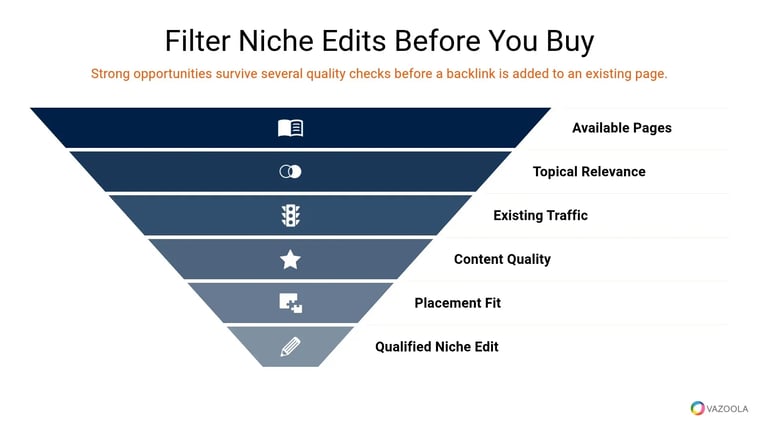
Niche edits place a backlink inside an article that already exists. No new guest article needs to be produced, which can reduce cost and shorten turnaround time.
A strong niche edit can also benefit from the history of an established page. The article may already rank, attract traffic, or have backlinks of its own.
The biggest risk comes from treating every available insertion as equally valuable. Agencies should pay close attention to the specific page receiving the link. A contextual addition to a maintained resource on a relevant website differs significantly from a bulk insertion on a forgotten article.
Niche edits often fit campaigns where clients need efficient authority building without commissioning new content for every placement.
3. Sponsored Content and Paid Placements
Some clients need visibility more than ranking influence. Sponsored articles and other paid placements can help put a brand in front of a relevant publisher's audience while creating opportunities for referral traffic and awareness.
Google expects paid links to use appropriate attributes, such as rel="sponsored" or rel="nofollow". Agencies therefore should not sell sponsored content as a direct shortcut to organic rankings.
Instead, evaluate these placements using goals such as:
-
Referral traffic
-
Brand exposure
-
Product or research promotion
-
Audience reach
-
Branded search interest
Sponsored content can make sense when the publication's readership matters on its own. A highly relevant audience may justify the investment even when the link itself is not intended to pass ranking credit.
Ask publishers for audience or performance data before approving a premium sponsored placement. The strongest opportunity may be a smaller publication with a concentrated audience that closely matches the client's buyers rather than the outlet with the biggest headline reach.
4. Digital PR-Style Placements
Digital PR occupies a different category because agencies are paying for the work that can lead to coverage rather than simply purchasing a guaranteed link.
A managed digital PR campaign may include research, story development, journalist outreach, and pitching. Publishers and reporters still decide whether the story deserves coverage.
The approach works best for clients that have something worth talking about. Original research, proprietary data, expert commentary, strong visual assets, or timely insights can create natural reasons for journalists to mention a business.
Successful campaigns may produce links and mentions across trade publications, news sites, newsletters, and other authoritative sources. Results can vary more than they do with fixed placements, so agencies should set that expectation from the beginning.
Build PR campaigns around assets that can support more than one story angle. A useful dataset or expert resource can often be repackaged for different beats, giving outreach teams several chances to earn coverage without starting from scratch each time.
5. White-Label Link Packages
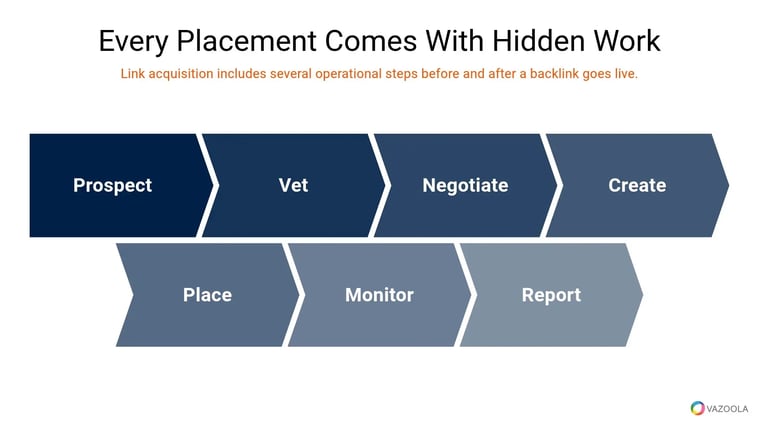
Managing link acquisition internally can consume more time than the placement itself. Prospecting, publisher vetting, negotiations, content production, follow-up, replacements, and reporting all create overhead.
A white-label link-building program lets an agency outsource much of that execution while continuing to own the client strategy and relationship.
The model can be especially useful when an agency manages multiple accounts with different needs. One client may require guest posts, another may need niche edits, and a third may benefit from a blended campaign.
Research into agency relationships shows why specialization can matter.
A 2025 marketing relationship study found that only 26% of surveyed clients agreed that generalist agencies were better than specialists, while 70% disagreed that one generalist agency made more sense than working with several specialists.
For agencies, outside link-building support can provide that specialized expertise without requiring another internal team.
6. Brand Mention Placements
Search visibility no longer ends with a traditional ranking position. Brands also want to appear in authoritative discussions, source material, and third-party content that may influence both human readers and AI-generated answers.
A brand mentions service focuses on getting the client's name into relevant content. Some mentions include a backlink. Others establish an association between the brand and a topic without linking directly.
Brand mentions can fit clients pursuing:
-
Greater name recognition
-
Broader topical authority
-
AI search visibility
-
More diverse off-site signals
-
Visibility beyond standard organic search listings
Quality matters here, too. Repeated mentions on irrelevant websites create activity without necessarily creating meaningful visibility.
Track the language that surrounds brand mentions instead of only focusing on how many mentions appear. Consistent associations with the client's priority topics, products, or expertise can reveal whether placements are reinforcing the brand identity the campaign is meant to build.
How to Decide Which Link Types Fit Which Client
No universal allocation of guest posts, niche edits, PR, sponsored placements, and mentions works across an agency's entire roster. The mix should follow the client's goals, competitive position, and budget.
A simple decision process can keep buying choices tied to strategy:
-
Define the primary goal. Decide whether the client most needs rankings, referral traffic, brand awareness, AI visibility, or a combination of outcomes.
-
Identify the pages that need support. Product pages, service pages, research assets, blog content, and homepages create different acquisition opportunities.
-
Review the existing link profile. A client already heavy on guest posts may benefit from greater source and format diversity.
-
Match quality expectations to the budget. A smaller budget should usually lead to tighter prioritization rather than a larger volume of inexpensive links.
-
Consider the industry. Specialized or highly competitive sectors often require stronger topical alignment and more careful publisher selection.
-
Decide how success will be measured. Rankings, referral traffic, leads, branded searches, mentions, and AI citations answer different questions.
One rule can simplify nearly every buying decision: do not purchase a backlink simply because it is available. The placement should fill a specific gap in the client's broader strategy.
Create a short link-acquisition thesis for each client before approving monthly purchases. A sentence or two explaining which gaps the next group of placements should address can keep multiple account managers and vendors working toward the same goal as the campaign evolves.
Why Outsourcing the Right Mix Protects Your Margin
Link acquisition becomes expensive long before an agency pays for a placement. Staff members spend time prospecting, evaluating publishers, negotiating, creating content, checking live links, handling replacements, and reporting results.
Outside support can turn some of that variable workload into a more predictable cost, though agencies still need visibility into what they’re buying.
A 2026 Association of National Advertisers study found that 90% of surveyed client-side marketers cited uncertainty about whether agencies' principal media recommendations were truly in their best interests as their leading concern. The ANA research focused on media buying rather than backlink acquisition, but it points to a broader expectation: Clients want confidence that agency spending decisions serve their goals.
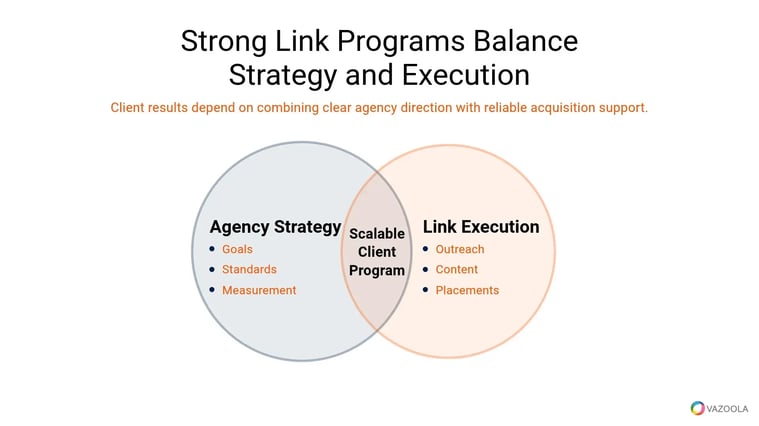
Outsourcing works best when agencies retain control over strategy and standards. A partner can handle labor-intensive acquisition while the agency continues deciding which opportunities fit each client, which placements to reject, and how results will be measured.
Build the Right Link Mix for Every Client
The best link strategy is rarely the one with the most placements. Instead, it’s the one where every purchase has a clear job.
Choose the mix based on what the client needs to accomplish, then measure whether each placement earns its place in the budget. That approach keeps link building focused, flexible, and easier to defend.
Vazoola helps agencies scale guest posts, niche edits, digital PR, brand mentions, and white-label link building. Explore Vazoola's link-building solutions to build a stronger mix for every client.