

Feb 03, 2026

Casey Bjorkdahl is one of the pioneering thought leaders in the SEO community. In 2010, Casey co-founded Vazoola after working for a Digital Marketing Agency for five years in New York City. Vazoola is now one of the fastest growing and most widely recognized SEO marketing firms in the country.


.Edu and .gov backlinks have held a near-legendary status in SEO circles for years. They’re truly considered the unicorns of all inbound links.
Marketing teams may therefore assume a single .edu or .gov backlink is worth more than several commercial links, but the value really depends on relevance, placement, and site authority.
Early in most SEO conversations, these valuable backlinks often are used as a benchmark for “high-quality” links. When you review those links alongside current search guidance, it becomes clear that they only matter when they serve a real purpose.
Domain extensions don't automatically create trust – they matter when they play a clear role in relevance or verification.
In other words, while the .edu and .gov backlink goose can lay the proverbial golden SEO egg, it’s not a given.
Map .edu and .gov prospects to specific business objectives, such as credibility support or brand validation, rather than ranking gains alone.
Key Takeaways
-
.Edu and .gov backlinks do not carry automatic ranking power.
-
Relevance and editorial placement matter more than domain extension.
-
These links require time, effort, and authentic value creation.
-
A balanced link-building strategy usually delivers stronger results.
Table of Contents
What .Edu and .Gov Backlinks Are – And Why They Matter for SEO
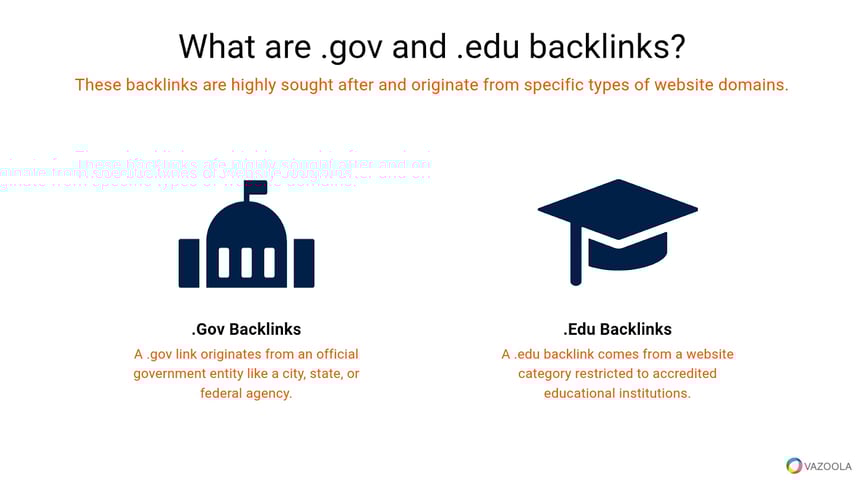
A .edu backlink comes from a website using the .edu top-level domain, which is restricted to accredited educational institutions. A .gov backlink, on the other hand, originates from an official government entity like a city, state, or federal agency. Both of these domain types operate under tighter controls than most commercial websites.
That restriction matters since it limits who can publish content. Schools and agencies usually have internal review processes before adding new pages or links. Those processes help eliminate spam and low-quality content.
Trust, however, does not equal guaranteed SEO value. Even links from trusted domains only help when they're relevant and well placed.
Why These Links Have a Reputation for Quality
.Edu and .gov sites earned their SEO reputation during the early days of search when fewer ranking signals existed. Search engines relied even more heavily on link patterns, and these domains tended to link only when the content was educational or served the public interest.
User perception also plays a role in .edu and .gov backlinks’ stellar reputation.
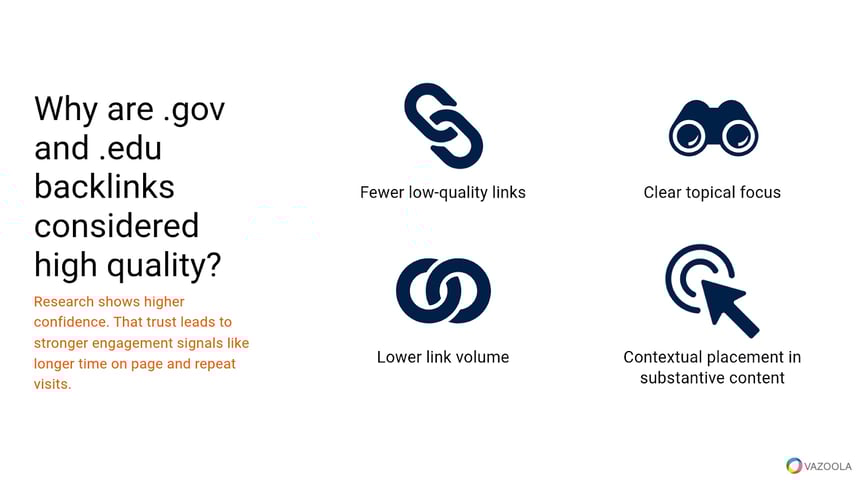
Research on trust in government and educational websites consistently shows higher confidence compared to many commercial sources. That trust often leads to stronger engagement signals like longer time on page and repeat visits.
Several characteristics explain why these links are deemed to be high quality:
- Editorial review processes limit low-quality or self-serving links.
- Clear topical focus ties to education, research, or public service.
- Lower overall link volume reduces noise and dilution.
- Higher likelihood of contextual placement within substantive content.
Remember, search engines don’t directly reward trust. They recognize outcomes associated with trust – things like editorial integrity and user satisfaction.
How Search Engines Evaluate .Edu and .Gov Links
For years now, Google has emphasized that top-level domains do not receive special treatment. Links are evaluated based on their relevance, their context, and their editorial intent. According to Google’s advice on how links influence rankings, a relevant backlink from a smaller industry site can outweigh an unrelated one from a prestigious domain.
A link’s placement matters just as much as its source. A contextual link placed within a research paper or resource guide, for example, carries more weight than a footer link or generic directory listing. Factors like the surrounding text, page purpose, and user intent all contribute to how its value flows.
.Edu and .gov links often perform well because they naturally meet these criteria, not because of the domain extensions themselves.
Avoid anchoring .edu or .gov links with commercial keywords. Branded and descriptive anchors are more likely to pass editorial review and stick long-term.
Practical Ways to Get .Edu Backlinks
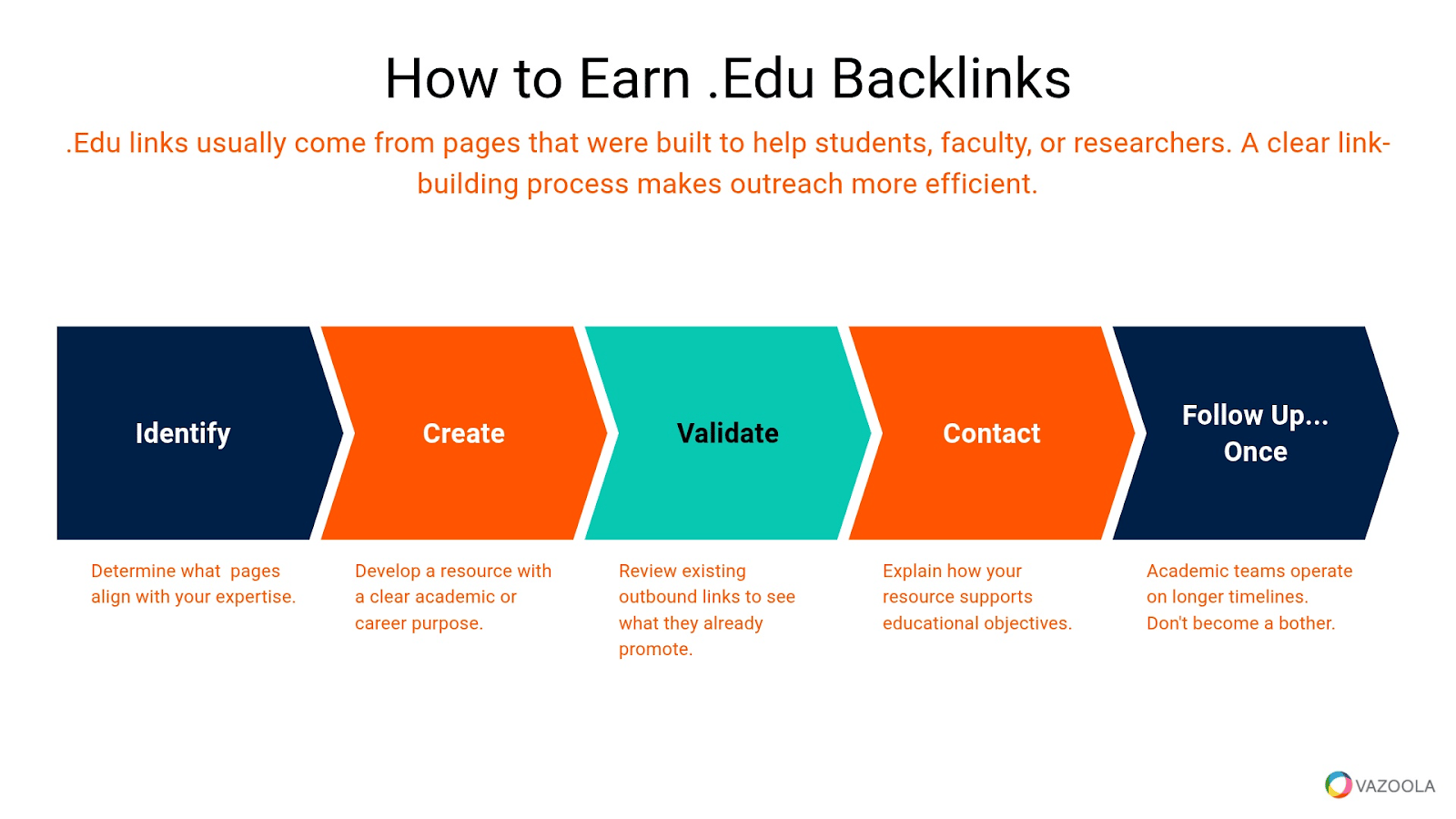
.Edu links usually come from pages that were built to help students, faculty, or researchers. A clear link-building process makes outreach more efficient. It keeps the value exchange honest.
Two parts matter most here: the outreach steps and the link-worthy tactics.
Outreach Steps That Keep Efforts Focused
Earning .edu backlinks requires an alignment with academic goals. Universities are here to educate students, support research, and prepare graduates for careers. Outreach that ignores those priorities usually fails miserably.
A structured approach can really improve results and keep efforts focused on creating value. The following steps will set you on the right track:
- Identify departments, career centers, or resource hubs that align with your expertise. Look beyond the homepage. Instead, focus on pages that were built to support students or faculty.
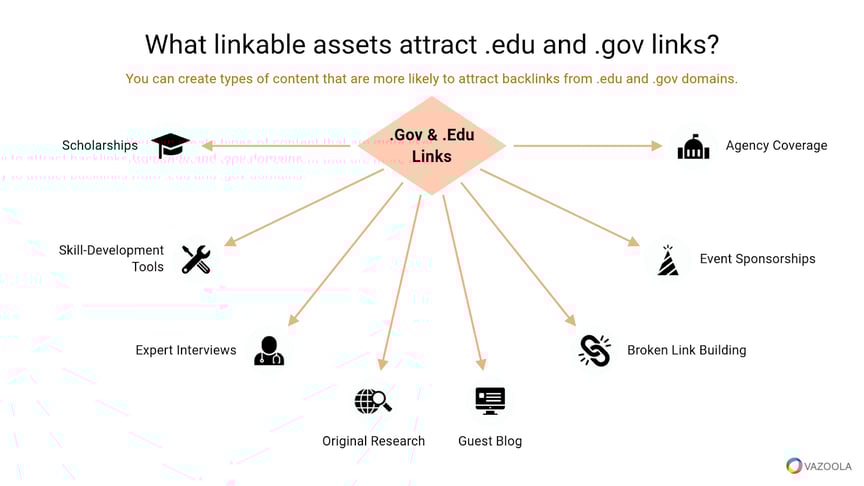
- Develop a resource that serves a clear academic or career purpose. Scholarships, industry guides, research summaries, and workforce tools all tend to perform the best.
- Validate relevance before outreach. Review existing outbound links to understand what the institution already promotes.
- Reach out with a concise, value-first message. Explain how the resource supports students, coursework, or even career outcomes.
- Follow up once, then move on. Academic teams operate on longer timelines, and they may not respond to repeated outreach.
Tactics That Commonly Earn .Edu Links
Scholarships and student discounts work best when they address real financial needs. Many institutions maintain opportunity pages for students. But programs created solely for link placement tend to be ignored.
Career-focused resources also perform well. Universities frequently link to job boards and industry guides. Options like skill-development tools help students transition into the workforce.
Further, faculty and researcher interviews offer another path. Professors may share interviews or citations on departmental pages when the discussions align with their fields.
Broken link building even works – when it’s done carefully. Academic sites can sometimes contain outdated resources. Replacing a broken reference with a current, equivalent linkable asset provides immediate value to the institution’s website.
Prioritize targeting pages that already link externally multiple times. A single outbound link on a page often signals editorial reluctance, not authority.
How to Earn .Gov Backlinks Free
Government backlinks require an entirely different approach than traditional link building. Agencies operate under stricter standards and longer review cycles. That makes it more important than ever to understand their priorities before outreach ever begins.
How Government Sites Evaluate External Links
Indeed, government backlinks follow a separate set of rules. Agencies focus on qualities like public benefit, compliance, and neutrality. Promotional language rarely passes their stringent review.
On the bright side, local government sites offer the most accessible opportunities for link building among this group. City and county pages frequently list community resources and tools, as well as educational materials. Smaller agencies manage fewer requests, so they can respond in a more timely manner.
Public-facing resources usually perform best with government sites. Guides, calculators, data studies, and safety information that support civic programs typically align well with agencies’ goals. But your linkable content must be factual and non-commercial.
Events can also open doors to backlinking. By sponsoring or participating in community initiatives, workshops, or public forums, you can create opportunities for acknowledgment on official pages. The value comes from the participation, not the promotion.
Broken link outreach applies here, as well. Government sites frequently maintain large resource libraries, so link decay is common. When you replace outdated links with accurate information, your link supports both users and administrators.
Step-By-Step .Gov Backlink Outreach Process
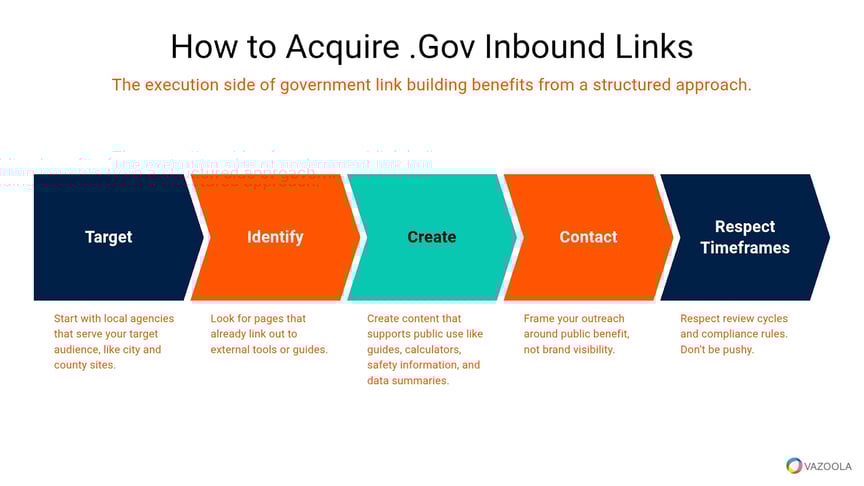
The execution side of government link building benefits from a structured approach. Some steps that can help obtain free .gov backlinks include:
- Start with local agencies that serve your target audience. City and county sites often publish public-facing resources.
- Identify resource pages, program pages, or community initiatives that already link out to external tools or guides.
- Create content that supports public use. Factual guides, calculators, safety information, and data summaries perform best for this objective.
- Frame your outreach around public benefit, not brand visibility. Explain how the resource improves access to information or services.
- Respect review cycles and compliance rules. Government approvals often involve multiple stakeholders. Don’t be pushy.
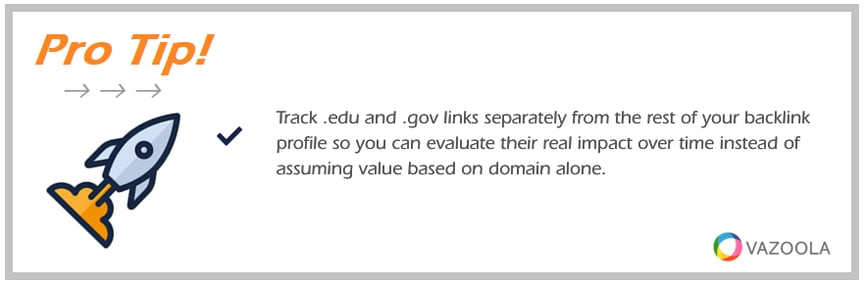
Track .edu and .gov links separately from the rest of your backlink profile so you can evaluate their real impact over time instead of assuming value based on domain alone.
Setting Realistic Expectations
.Edu and .gov backlinks take time to effectively build. You have to remember this point in your link-building endeavors. Approval processes may involve multiple reviewers. That means timelines can stretch from weeks into months.
It’s notable that one high-quality link won’t replace a diversified backlink profile. Many sites see faster results when earning multiple relevant industry links rather than chasing a single prestigious placement.
Your efforts should always match the opportunity cost. Teams that solely fixate on rare links can easily overlook scalable tactics that might deliver steadier gains.
Are .Edu and .Gov Backlinks Worth the Effort?
It’s true that .edu and .gov backlinks can strengthen credibility when they align naturally with a brand’s mission. Thus, they work best for organizations tied to education, research, healthcare, or public services.
For everyone else, these sorts of links function as supporting assets rather than primary drivers. Relevance, consistency, and editorial value all still determine success. The most resilient link-building strategies focus on creating resources people genuinely need – regardless of the domain that links back.
The moral of the story? Chasing domain extensions without strategy wastes time. But building value earns links that actually last.
If getting high-quality backlinks feels harder than it should, it might be time to reassess how you’re managing your outreach, prospecting, and follow-up.
Vazoola’s link-building resources are designed to help marketing teams scale ethical outreach, track performance, and focus on efforts that actually deliver results. Review your current approach to reveal where .edu and .gov link opportunities fit into a broader, more effective strategy.
Are you ready to shoot for the stars in your link-building strategy while maintaining focus on what’s effective? Contact Vazoola today.